
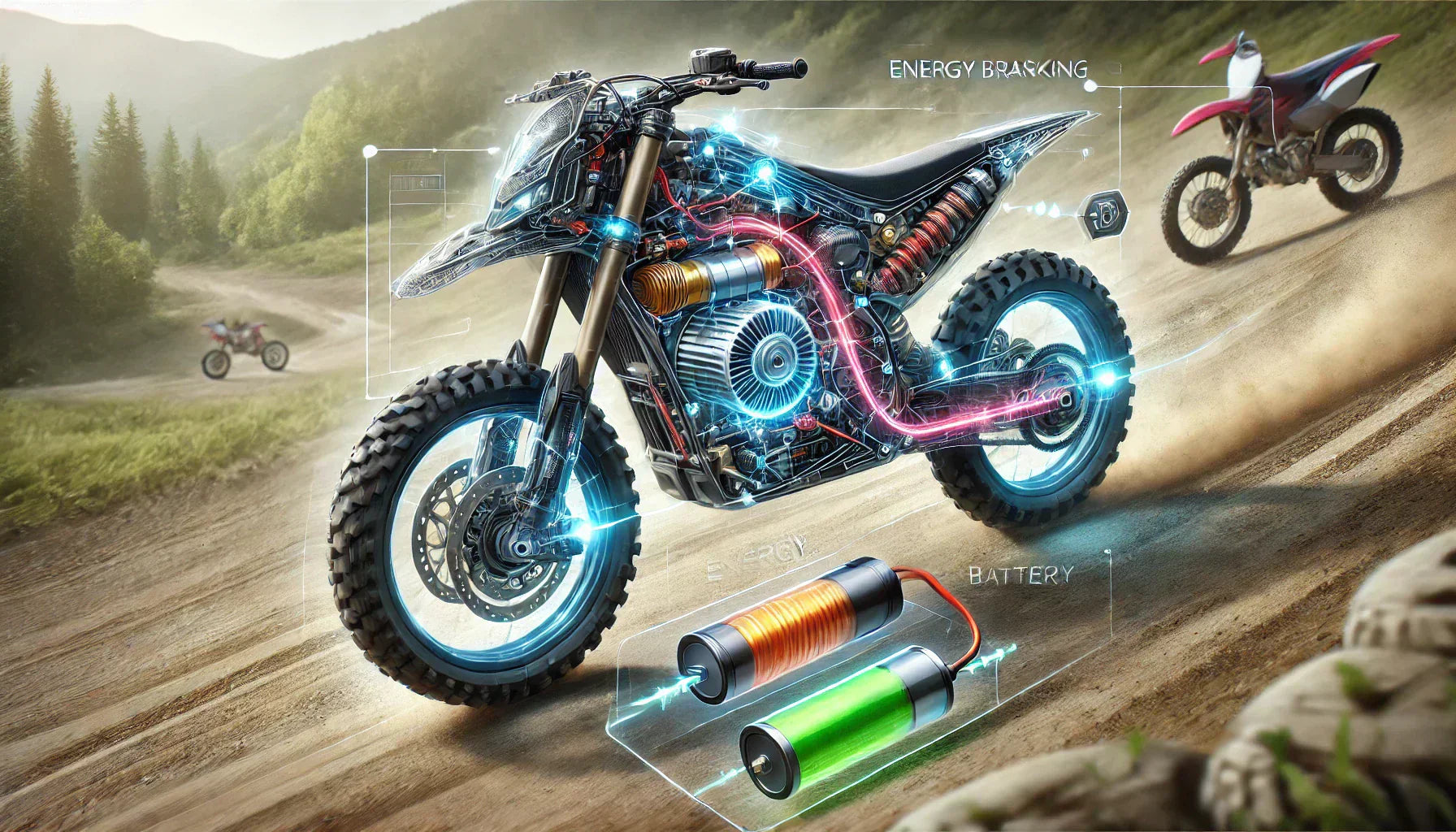
Regen Braking Explained: Does It Really Extend Battery Life?
Regenerative braking, often searched as regen braking electric bike, does regenerative braking extend battery life, and how regenerative braking works on e‑bikes, is one of the most misunderstood features in electric mobility. Many riders assume regenerative braking dramatically recharges the battery while riding. Others believe it has little to no impact.
So what is the truth?
This in‑depth guide explains how regenerative braking works, whether it truly increases electric bike range, how much battery life it realistically saves, and whether it is worth having on your next e‑bike. If you are researching how to increase electric bike battery life, best electric bike for long range, or electric bike efficiency upgrades, this article will give you the technical clarity you need.
What Is Regenerative Braking on an Electric Bike?
Regenerative braking is a system that allows an electric motor to reverse its function during deceleration. Instead of consuming electricity to create motion, the motor acts as a generator when braking, converting kinetic energy back into electrical energy and feeding it into the battery.
This concept is widely used in electric cars and hybrid vehicles. On electric bikes, regenerative braking works similarly but with important differences in efficiency and output.
When riders search how does regen braking work on e‑bikes, the simplified explanation is:
- The rider applies brake pressure or releases throttle
- The motor switches to generator mode
- Kinetic energy converts into electrical energy
- The battery receives a small recharge
However, the amount of energy recovered depends heavily on motor type, terrain, rider weight, and riding style.
Which Electric Bikes Support Regenerative Braking?
Not all electric bikes support regenerative braking. The system requires a direct‑drive hub motor. Mid‑drive motors and geared hub motors typically do not support regen functionality because of internal freewheel mechanisms.
If you are shopping for an electric bike with regenerative braking, look for:
- Direct‑drive rear hub motor systems
- Compatible regenerative motor controllers
- Advanced battery management systems (BMS)
To explore compatible performance systems and electric bike upgrades, visit: Shop Electric Bike Performance Accessories
How Much Energy Does Regenerative Braking Actually Recover?
This is the most searched question: does regenerative braking increase electric bike range?
The honest answer: Yes — but modestly.
On electric bikes, regenerative braking typically recovers between 5% and 15% of expended energy in real‑world conditions. In flat urban environments with minimal stopping, recovery may be closer to 3% to 5%. In hilly terrain with long descents, it may approach 10% to 15%.
Why is the number relatively small?
- E‑bikes are lightweight compared to electric cars
- They operate at lower speeds
- Available kinetic energy is limited
- Battery charge acceptance has limits
Unlike electric vehicles weighing thousands of pounds, electric bikes simply do not generate enough kinetic energy to create massive recharge gains.
Does Regenerative Braking Extend Battery Life?
Riders frequently search does regen braking extend battery life and can regenerative braking reduce battery wear.
There are two ways to interpret battery life:
1. Extending Range Per Ride
Regenerative braking can slightly increase total riding distance per charge. On a 50‑mile battery range, regen might add 2 to 5 miles depending on terrain. This is helpful but not transformative.
2. Extending Long‑Term Battery Lifespan
Because regenerative braking reduces reliance on mechanical braking and slightly lowers deep discharge cycles, it can marginally improve long‑term battery health. However, the effect is minimal compared to proper charging habits.
For maximum battery longevity, focus on:
- Avoiding full 0% discharges
- Charging between 20% and 80% when possible
- Keeping batteries at moderate temperatures
- Using manufacturer‑approved chargers
Regenerative Braking vs Mechanical Braking
Another overlooked benefit of regenerative braking is reduced brake wear.
Because the motor assists in slowing the bike, mechanical brake pads experience less stress. This can:
- Extend brake pad lifespan
- Reduce rotor heat buildup
- Improve overall braking control
- Lower maintenance costs over time
Riders searching how to reduce e‑bike maintenance costs may find regenerative braking valuable for this reason alone.
When Regenerative Braking Works Best
Regenerative braking is most effective under specific conditions:
- Long downhill descents
- Frequent stop‑and‑go urban riding
- Heavier rider weight loads
- Cargo electric bikes
It is less effective during:
- High‑speed flat cruising
- Lightweight road cycling
- Short commuting distances
If your riding style involves significant elevation changes, regenerative braking can offer meaningful efficiency gains.
Does Regenerative Braking Slow You Down?
Some riders worry that regen braking reduces performance or acceleration.
In reality, regenerative systems only activate during deceleration or when specifically engaged. They do not limit top speed or torque output during normal riding. In fact, some advanced controllers allow adjustable regen intensity levels.
Is Regenerative Braking Worth It on an E‑Bike?
If your primary goal is dramatically increasing electric bike range, regenerative braking alone will not double your mileage. However, it can:
- Add small but measurable range improvements
- Improve braking efficiency
- Reduce mechanical brake wear
- Enhance downhill control
For riders focused on electric bike efficiency upgrades and long‑range e‑bike performance, regen braking should be considered one part of a larger optimization strategy.
For additional range improvements, consider pairing regen systems with:
- Low rolling resistance tires
- Proper tire inflation
- Optimized pedal assist tuning
- Lightweight accessory upgrades
Explore compatible efficiency upgrades here: Browse Electric Bike Upgrades
Common Myths About Regenerative Braking
Myth 1: Regen Fully Recharges the Battery While Riding
False. Regen provides supplemental energy recovery, not full recharging capability.
Myth 2: Regen Works on All Electric Bikes
False. Only direct‑drive hub motor systems support regenerative braking.
Myth 3: Regen Replaces Mechanical Brakes
False. Mechanical brakes are still essential for emergency stopping and safety.
Final Verdict: Does Regenerative Braking Really Extend Battery Life?
Yes — but modestly.
Regenerative braking improves electric bike efficiency by recovering small amounts of energy during deceleration. It can extend per‑ride range by several percentage points and reduce brake wear. However, it is not a replacement for proper battery care, smart riding habits, or high‑capacity battery systems.
If your goal is maximizing electric bike battery life, the most effective strategies remain:
- Efficient riding technique
- Battery health management
- Lightweight component upgrades
- Optimized tire performance
Regenerative braking is a useful efficiency feature — just not a miracle solution.