
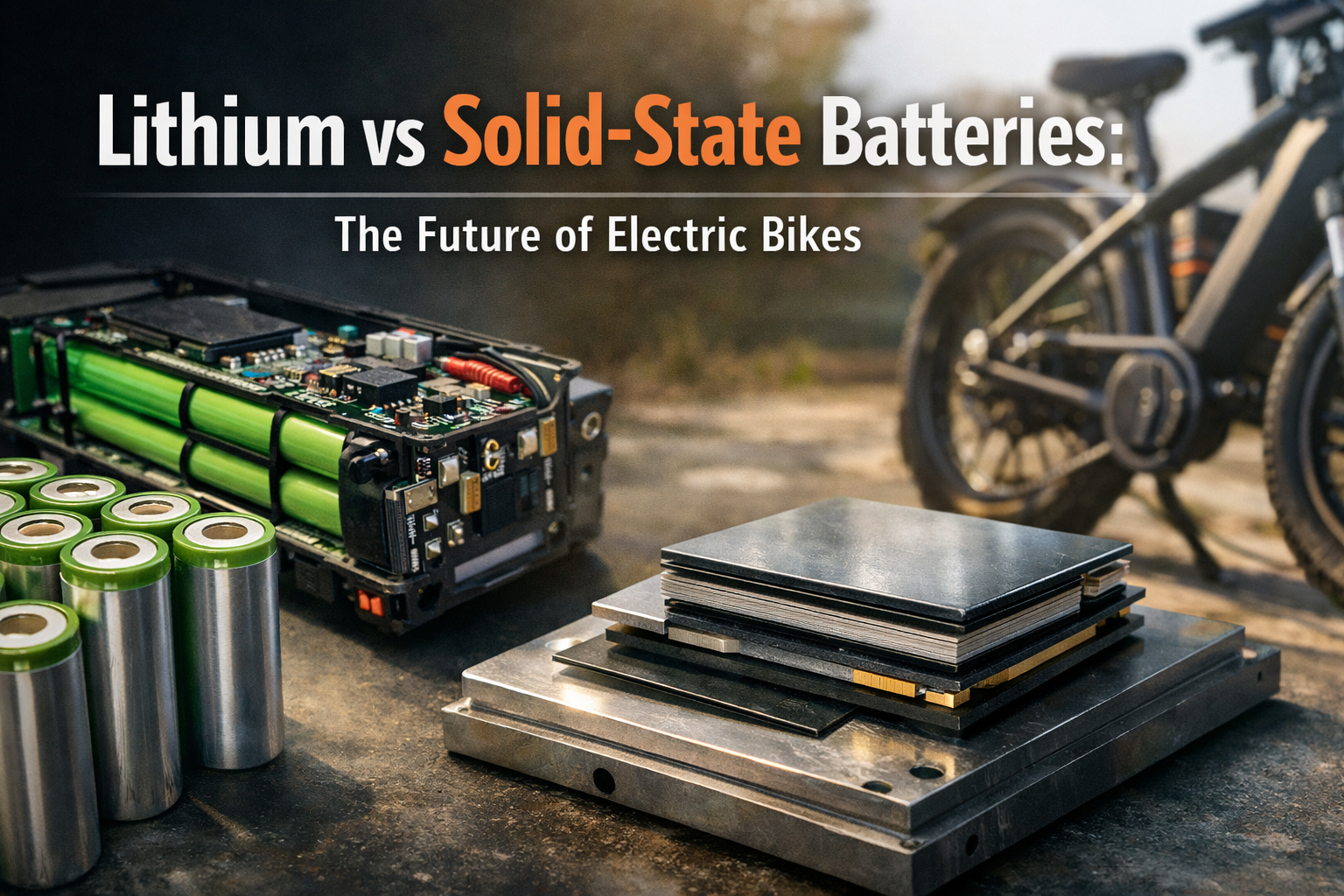
Lithium vs Solid‑State Batteries: The Future Of Electric Bikes
The electric bike industry is advancing at a rapid pace, and battery technology sits at the center of that evolution. Riders searching for best electric bike battery technology, lithium vs solid‑state batteries, future of e‑bike batteries, or how to increase electric bike range all want one thing: more power, longer range, faster charging, and improved safety.
Battery performance directly impacts electric bike speed, torque delivery, climbing ability, overall ride quality, and long‑term ownership cost. Whether you ride a commuter e‑bike, a high‑performance electric mountain bike, or a cargo e‑bike, understanding the difference between lithium‑ion and solid‑state battery technology helps you make smarter upgrade decisions.
This in‑depth guide explains how lithium‑ion batteries work, what solid‑state batteries promise for the future, how both technologies compare in energy density and lifespan, and which battery system currently delivers the best real‑world electric bike performance.
Why Battery Technology Determines Electric Bike Performance
When riders search for how to make an electric bike faster or how to extend e‑bike battery life, the discussion often focuses on motors, controllers, and torque sensors. However, the battery is the heart of the entire system. It determines:
- Total electric bike range per charge
- Peak power delivery during acceleration
- Hill‑climbing capability
- Charging speed and downtime
- Long‑term reliability and replacement cost
Without efficient energy storage, even the most powerful motor cannot perform at its full potential. That is why battery chemistry is one of the most important factors shaping the future of electric bikes.
Understanding Lithium‑Ion Batteries In Electric Bikes
Lithium‑ion batteries currently dominate the electric bike market. From entry‑level commuter models to high‑torque electric mountain bikes, lithium‑ion remains the standard due to its balance of energy density, reliability, and cost efficiency.
How Lithium‑Ion Battery Technology Works
Lithium‑ion batteries operate by moving lithium ions between a cathode and an anode through a liquid electrolyte. During discharge, ions flow from the anode to the cathode, generating electrical energy to power the motor. During charging, the ions reverse direction.
This design allows for:
- High energy density relative to weight
- Rechargeable cycling without memory effect
- Compact battery pack design
- Scalable configurations for different voltage systems
Modern e‑bike battery packs typically range between 36V and 52V systems, with capacities measured in amp‑hours (Ah). Higher voltage and capacity combinations translate to increased power output and longer range.
Advantages Of Lithium‑Ion Batteries For Electric Bikes
When riders search for best battery for electric bike range, lithium‑ion systems continue to deliver dependable performance. Key benefits include:
- Strong real‑world range capability
- Proven compatibility with most motor systems
- Reasonable charging times
- Widespread availability of replacements
- Established manufacturing standards
With proper care, most lithium‑ion electric bike batteries last between 500 and 1,000 charge cycles. For many riders, that translates to several years of consistent performance.
To support lithium battery efficiency and extend system life, riders can explore compatible upgrades here: Shop Electric Bike Accessories
Limitations Of Lithium‑Ion Technology
Despite its strengths, lithium‑ion technology has inherent limitations:
- Liquid electrolytes can pose thermal risks if cells are damaged
- Capacity slowly degrades over time
- Performance may decline in extreme cold or heat
- Energy density improvements are approaching practical limits
These limitations are driving research into next‑generation energy storage systems — particularly solid‑state batteries.
What Are Solid‑State Batteries?
Solid‑state batteries represent one of the most promising innovations in electric mobility. Instead of using a liquid electrolyte, solid‑state batteries rely on solid conductive materials such as ceramics or polymers to transfer ions.
How Solid‑State Battery Technology Works
By replacing the liquid electrolyte with a solid material, the internal battery structure becomes more stable and less prone to leakage or combustion. This design shift opens the door to higher energy density and improved safety.
Solid‑state battery systems aim to deliver:
- Greater energy storage in a smaller footprint
- Improved thermal stability
- Reduced risk of fire
- Longer charge cycle lifespan
Why Solid‑State Batteries Matter For Electric Bike Riders
Electric bike enthusiasts frequently search for longest range electric bike battery and fast charging e‑bike solutions. Solid‑state technology could significantly impact both areas.
Potential benefits include:
- Lighter battery packs with increased capacity
- Higher sustained power output
- Shorter charging cycles
- Reduced long‑term degradation
For performance‑oriented riders and long‑distance commuters, these improvements could dramatically enhance real‑world riding efficiency.
Lithium vs Solid‑State Batteries: Performance Comparison
Energy Density And Electric Bike Range
Energy density determines how much power can be stored relative to weight. Lithium‑ion batteries already provide strong density, enabling many e‑bikes to achieve 40 to 80 miles per charge depending on terrain and assist level.
Solid‑state batteries aim to increase energy density further. This could result in:
- Extended range without increasing battery size
- Reduced overall bike weight
- Improved acceleration due to lighter systems
For riders searching how to increase electric bike range without upgrading motor, future battery chemistry will be a major factor.
Safety And Thermal Management
One common search query is are electric bike batteries safe. Lithium‑ion batteries are safe when properly engineered, but damaged cells can overheat.
Solid‑state batteries offer enhanced safety due to non‑flammable electrolytes. This makes them particularly attractive for high‑performance electric mountain bikes and cargo e‑bikes that operate under heavy loads.
Charging Speed
Fast charging capability is increasingly important for urban commuters. Lithium‑ion batteries support rapid charging, but frequent fast charging can accelerate degradation.
Solid‑state technology theoretically allows:
- Faster recharge cycles
- Reduced internal heat generation
- Longer battery lifespan under rapid charging
Battery Lifespan And Replacement Costs
Searches for electric bike battery replacement cost highlight rider concerns about long‑term ownership. Battery lifespan significantly affects resale value and total cost of ownership.
Solid‑state batteries may provide:
- Higher charge cycle ratings
- Slower capacity fade
- Improved long‑term voltage stability
Current Market Reality: Why Lithium‑Ion Still Dominates
Although solid‑state batteries show tremendous promise, lithium‑ion remains the dominant technology in electric bikes today. Manufacturing infrastructure, supply chains, and affordability favor lithium‑ion systems.
For riders looking to upgrade now, optimizing lithium battery performance is the most practical solution. Enhancing drivetrain efficiency, reducing rolling resistance, and maintaining proper charging habits can significantly improve range without waiting for next‑generation battery chemistry.
Explore performance upgrades designed to complement modern lithium systems: Shop Electric Bike Performance Accessories
How To Extend Electric Bike Battery Life
Whether using lithium‑ion today or preparing for solid‑state tomorrow, battery care plays a critical role in maximizing electric bike performance.
Best practices include:
- Avoiding frequent full discharges
- Storing batteries at moderate temperatures
- Using manufacturer‑approved chargers
- Maintaining consistent tire pressure to reduce motor strain
- Reducing unnecessary weight on the bike
These habits improve efficiency, reduce degradation, and extend usable battery life.
The Future Of Electric Bike Battery Technology
The future of electric bike batteries will likely evolve in stages. Solid‑state systems may first appear in premium models before scaling into mid‑range commuter platforms. As production costs decrease and performance advantages become measurable in real‑world conditions, adoption will accelerate.
In the meantime, lithium‑ion technology continues to improve through better battery management systems, smarter controllers, and enhanced thermal regulation.
Battery innovation remains central to achieving:
- Longer range electric bikes
- Faster charging electric mobility
- Improved safety standards
- Higher sustained performance