
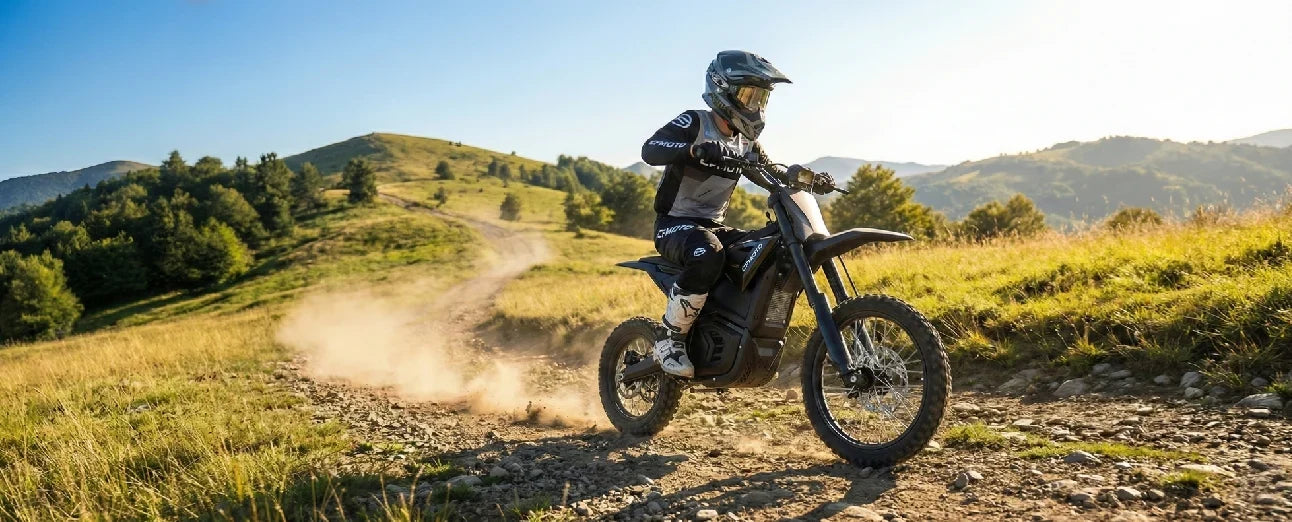
Electric Dirt Bike Charging Explained: Why Trailheads Still Lack Charging Stations
Most trailheads still lack dedicated charging stations because installing electrical infrastructure in remote riding areas is expensive, power availability is limited, and there is no universal charging standard for electric dirt bikes. While public EV charging networks continue to expand, most are designed for passenger vehicles rather than lightweight off-road motorcycles. As a result, electric dirt bike riders continue to rely primarily on home charging, portable generators, removable batteries, or nearby charging locations.
Electric Dirt Bike Charging Is Improving—But Trailheads Are Still Behind
The popularity of electric dirt bikes has grown rapidly over the past few years. Riders appreciate their instant torque, quiet operation, lower maintenance costs, and environmentally friendly performance compared to traditional gas-powered motorcycles. As brands continue introducing more capable electric dirt bikes with longer battery range and improved technology, one challenge continues to frustrate riders:
Where do you recharge once you reach the trail?
Unlike gasoline motorcycles that can simply stop at a nearby fuel station, most electric dirt bike owners discover that public charging options near trailheads are surprisingly limited. While thousands of public EV chargers are available across North America, very few are installed where off-road riders actually begin their adventures.
This lack of charging infrastructure creates what many riders call "trailhead range anxiety." Instead of worrying about finding fuel, electric dirt bike owners must carefully calculate battery range before leaving home.
The good news is that this problem isn't caused by poor electric dirt bike technology. Instead, it results from infrastructure challenges that the entire off-road industry is still working to solve.
Why Are There So Few Charging Stations at Trailheads?
At first glance, installing a few charging stations at popular riding areas might seem like an easy solution. In reality, trailheads present unique engineering and financial challenges that differ significantly from city parking lots, shopping centers, or highway rest stops.
Several factors explain why charging infrastructure remains limited.
1. Most Trailheads Are Located in Remote Areas
Many of the best off-road riding locations are intentionally far from urban development. National forests, mountain trails, desert riding areas, and OHV parks often have limited electrical infrastructure.
Adding commercial charging equipment requires:
- Extending utility power lines
- Installing transformers
- Upgrading electrical service
- Ongoing maintenance
- Reliable internet connectivity for networked chargers
These upgrades can be expensive, especially when only a relatively small number of riders may use the chargers each day.
2. Most Public EV Chargers Were Designed for Cars
Current public charging networks were primarily built to support electric passenger vehicles rather than lightweight electric motorcycles or electric dirt bikes.
Passenger vehicles generally use standardized charging connectors and onboard charging systems. Electric dirt bikes, however, often rely on manufacturer-specific charging equipment, removable battery packs, or proprietary charging methods.
This lack of universal compatibility makes it more difficult to install charging stations that work seamlessly across multiple electric dirt bike brands. Industry groups continue exploring more interoperable charging solutions for micromobility vehicles, but standardization is still evolving.
3. Demand Is Still Relatively Small
Although electric dirt bikes are becoming increasingly popular, they still represent a much smaller market than electric cars.
When governments, utilities, or private businesses invest in charging infrastructure, they often prioritize locations where thousands of drivers pass each day. Busy highways, shopping centers, office buildings, and hotels naturally receive higher priority than remote off-road trail systems.
As electric dirt bike ownership continues to grow, the business case for installing charging stations near popular riding destinations is expected to become stronger.
4. Environmental Considerations
Many trailheads are located inside protected forests, wildlife areas, or public recreation lands where new construction is carefully regulated.
Installing charging infrastructure may require:
- Environmental impact reviews
- Land-use approvals
- Utility permits
- Construction planning
- Long-term maintenance agreements
These additional requirements often increase both project costs and implementation timelines.
Why Charging Infrastructure Matters for Electric Dirt Bike Riders
Charging availability directly affects how riders plan their trips.
Unlike many street motorcycles that travel through towns with frequent charging opportunities, off-road riders often spend hours exploring trails where no electrical service exists.
This means battery planning becomes an important part of every ride.
Many experienced riders choose electric dirt bikes with removable lithium-ion batteries because they can charge one battery at home while carrying another as a backup for longer adventures.
Others plan their routes around nearby campgrounds, visitor centers, RV parks, or small towns where standard electrical outlets or Level 2 chargers may be available. In many cases, destination charging remains more practical than expecting chargers directly at remote trailheads.
Is This a Problem for Every Rider?
Not necessarily.
In fact, many electric dirt bike owners rarely depend on public charging.
Unlike electric cars that often cover hundreds of highway miles in a single trip, most electric dirt bikes are transported to riding areas using trucks, trailers, or vans. Riders typically begin the day with a fully charged battery, complete their ride, and recharge once they return home.
For recreational weekend riders, this routine works well and reduces the need for dedicated trailhead charging.
However, riders tackling longer backcountry routes, multi-day adventures, or endurance events would certainly benefit from more accessible charging infrastructure in the future.
The Good News: Charging Solutions Are Improving
Although charging stations at trailheads remain uncommon today, the industry continues moving in a positive direction.
Battery technology is improving, riding range continues to increase, and more manufacturers are introducing removable battery systems that simplify charging away from home.
If you're looking for a premium electric dirt bike with proven battery performance today, models such as the 2026 Sur-Ron Light Bee X demonstrate how modern battery technology is already making longer rides more practical without depending on widespread trailhead charging infrastructure.
How Electric Dirt Bike Riders Solve Charging Challenges Today
While public charging stations at trailheads remain limited, experienced riders have developed practical ways to extend their riding time without relying on dedicated charging infrastructure.
Instead of expecting chargers at every trail entrance, many riders plan their trips around battery capacity, available electrical outlets, and backup charging options. With a little preparation, it's possible to enjoy long off-road adventures even in remote locations.
Here are the most common charging solutions used by electric dirt bike owners today.
1. Charge Your Battery Before You Leave
The simplest and most effective strategy is to begin every ride with a fully charged battery.
Since most riders transport their electric dirt bikes to the trail using a truck, trailer, or van, charging overnight at home is usually all that's needed for a full day of riding.
This approach eliminates the need to search for public charging stations and helps maximize battery performance.
2. Carry a Spare Battery
Many premium electric dirt bikes feature removable lithium-ion batteries, allowing riders to carry a second fully charged battery for extended riding sessions.
Although purchasing an extra battery requires an initial investment, it often provides greater flexibility than relying on public charging infrastructure.
A battery swap typically takes only a few minutes, making it one of the fastest ways to continue riding without waiting for a recharge.
3. Use Portable Power Stations
Portable power stations have become increasingly popular among outdoor enthusiasts. These battery-powered units can recharge compatible electric dirt bike batteries while camping, traveling, or spending the day at remote riding areas.
Modern portable power stations offer several advantages:
- Quiet operation
- No fuel required
- Low maintenance
- Suitable for camping and outdoor recreation
- Can power multiple electronic devices
However, riders should always confirm that the power station provides sufficient output for their specific battery charger.
4. Charge at Campgrounds or RV Parks
Although dedicated trailhead charging stations are uncommon, many nearby campgrounds and RV parks provide electrical hookups that riders can use with permission.
Planning routes around these locations can make multi-day riding trips much easier, especially when exploring national forests or large off-road trail systems.
5. Plan Your Route Around Charging Opportunities
One of the best habits electric dirt bike riders develop is route planning.
Before heading out, consider:
- Total riding distance
- Expected terrain
- Elevation changes
- Weather conditions
- Battery range
- Nearby charging locations
Careful planning reduces range anxiety and helps riders enjoy longer adventures with greater confidence.
Will Better Battery Technology Reduce the Need for Trailhead Charging?
In many cases, yes.
Battery technology continues to improve every year, giving riders longer range, faster charging times, and improved durability.
As energy density increases, future electric dirt bikes will be able to travel farther on a single charge, reducing dependence on public charging stations during typical recreational rides.
This is one reason many manufacturers are investing heavily in next-generation lithium-ion batteries and advanced battery management systems.
Choosing an Electric Dirt Bike With Longer Range
If charging infrastructure is a concern, choosing a bike with efficient battery performance can make a significant difference.
The 2026 Sur-Ron Light Bee X is a popular choice among trail riders thanks to its balance of lightweight design, removable battery system, and dependable real-world performance. Rather than depending on public chargers, many owners simply recharge at home or carry a backup battery for extended riding sessions.
Another excellent option is the Talaria Sting MX4, which is well known for its capable off-road performance and efficient battery system. For many riders, choosing a proven platform with reliable battery technology is a more practical solution than waiting for widespread trailhead charging infrastructure.
What Needs to Change?
Improving charging access for electric dirt bikes will require cooperation between manufacturers, public land managers, utilities, charging companies, and the off-road community.
Future improvements may include:
- More Level 2 charging stations near popular riding destinations.
- Standardized charging solutions for electric motorcycles.
- Solar-powered charging stations at remote trailheads.
- Battery swap programs for compatible models.
- Expanded charging infrastructure at campgrounds, OHV parks, and recreation areas.
As electric dirt bike ownership continues to grow, demand for these solutions is likely to increase, encouraging additional investment in off-road charging infrastructure.
Will Trailheads Have Electric Dirt Bike Charging Stations in the Future?
The outlook is promising, but change is likely to happen gradually rather than overnight.
Governments and private companies continue investing billions of dollars in electric vehicle infrastructure, yet most of that investment is currently focused on passenger cars and commercial transportation. As electric dirt bikes become more popular and off-road recreation continues to grow, demand for dedicated charging solutions at trailheads is expected to increase.
Future charging infrastructure may include solar-powered charging stations, battery swap facilities, smart charging hubs at OHV parks, and partnerships between public land managers and private charging providers. These developments could make multi-day rides and remote trail adventures much more convenient for electric dirt bike owners.
However, widespread trailhead charging will depend on rider demand, funding, electrical access, and cooperation between manufacturers, land management agencies, and local communities.
Should Charging Infrastructure Stop You from Buying an Electric Dirt Bike?
For most riders, the answer is no.
Although trailhead charging is still limited, it rarely prevents riders from enjoying their bikes. Most electric dirt bike owners already charge at home, transport their bikes to riding locations, and complete their rides using a fully charged battery.
For longer adventures, careful route planning, carrying a spare battery when possible, and understanding your bike's real-world range can effectively overcome many charging challenges.
As battery technology continues to improve, riders will likely depend less on public charging infrastructure while benefiting from longer riding ranges and faster charging times.
Key Takeaways
- Most trailheads do not currently offer dedicated charging stations for electric dirt bikes.
- Remote locations, infrastructure costs, and limited electrical access remain the biggest challenges.
- Most riders successfully rely on home charging, removable batteries, and careful ride planning.
- Battery technology is improving faster than trailhead charging infrastructure.
- Growing demand for electric dirt bikes is expected to encourage future investment in off-road charging solutions.
- Today's charging limitations should not discourage riders from considering an electric dirt bike if it fits their riding style.
Frequently Asked Questions
Can you charge an electric dirt bike at a trailhead?
In most cases, no. While a few riding areas may offer nearby electrical outlets or public EV chargers, dedicated electric dirt bike charging stations at trailheads remain uncommon.
Why don't trailheads have charging stations?
Many trailheads are located in remote areas where electrical infrastructure is limited. Installation costs, environmental regulations, and relatively low demand have slowed the expansion of charging facilities.
How do electric dirt bike riders recharge during long rides?
Many riders begin with a fully charged battery, carry a spare battery when possible, or plan routes that pass campgrounds, RV parks, or nearby towns where charging is available.
Will charging infrastructure improve in the future?
Yes. As electric dirt bike ownership continues to grow, more investment is expected in charging technology, battery innovation, and charging infrastructure near popular off-road destinations.
Are electric dirt bikes practical even without trailhead charging?
Yes. For most recreational riders, home charging combined with proper trip planning provides a reliable and convenient ownership experience.
Final Thoughts
Electric dirt bikes are transforming off-road riding by delivering instant torque, quiet operation, lower maintenance requirements, and an exciting riding experience. While charging infrastructure at trailheads still has room to grow, it should be viewed as a temporary challenge rather than a long-term barrier.
Battery technology is advancing rapidly, manufacturers continue introducing more efficient electric dirt bikes, and public charging networks are expanding every year. Together, these developments are helping make electric off-road riding more practical than ever before.
Whether you're considering your first electric dirt bike or upgrading to a newer model, understanding how charging works—and planning your rides accordingly—will help you get the most from every adventure. As infrastructure continues to improve, electric dirt bike ownership is likely to become even more convenient, giving riders greater freedom to explore trails with confidence.