
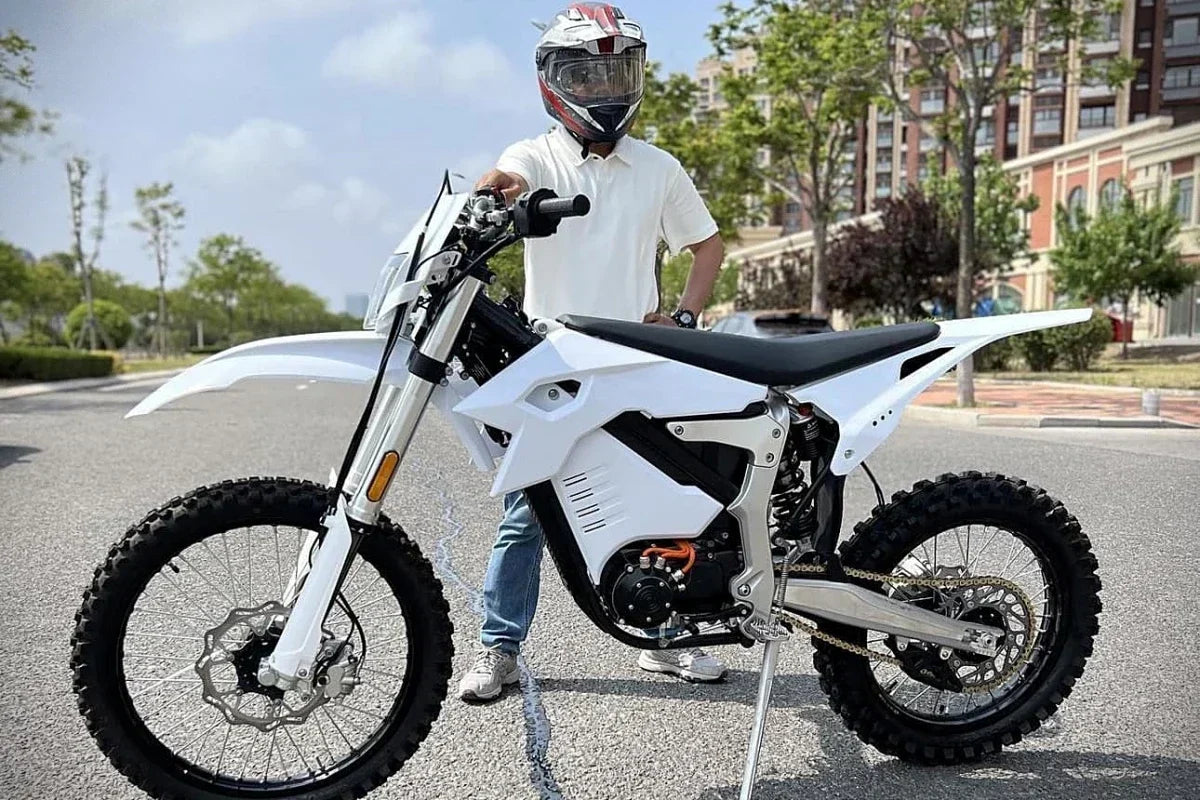
Do Electric Dirt Bikes Overheat During Aggressive Riding?
If you enjoy riding an electric dirt bike aggressively, you may eventually wonder: do electric dirt bikes overheat during hard riding? The short answer is yes, they can. Electric motors, controllers, and batteries all produce heat when they are working under heavy loads.
However, some heat is completely normal. The real concern is excessive heat that causes performance to drop, activates thermal protection, or repeatedly pushes components beyond their intended operating range.
Hard acceleration, steep hill climbs, high-speed riding, repeated stop-and-go riding, hot weather, and demanding off-road terrain can all increase the amount of heat generated by an electric dirt bike.
Understanding how that heat is created is particularly important if you ride a high-performance electric dirt bike such as a Surron Light Bee X or another high-output eMoto.
Quick Answer
Yes, electric dirt bikes can overheat during aggressive riding. The motor, controller, and battery can all become hot when the bike is subjected to sustained high current and heavy loads. Modern electric dirt bikes use temperature monitoring and protection systems to help prevent excessive heat from damaging components.
Why Do Electric Dirt Bikes Overheat?
Unlike a gasoline dirt bike, an electric dirt bike does not have an internal combustion engine producing heat through fuel combustion. That does not mean an electric powertrain is completely free from heat.
Whenever electrical energy is converted into mechanical energy, some energy is lost as heat.
This happens inside several parts of the motorcycle, including the:
- Electric motor
- Motor controller
- Battery pack
- Electrical wiring
- Connectors
- Other power electronics
Under normal riding conditions, the heat generated by these components can be dissipated without creating a problem. The situation changes when the motorcycle is repeatedly operated at high power.
Aggressive Riding Creates More Thermal Load
When you ride aggressively, you are asking the electric powertrain to deliver more energy in a shorter period of time.
For example, repeatedly accelerating hard out of corners requires substantially more motor output than maintaining a steady cruising speed. Similarly, climbing a steep hill can place a heavy load on the motor even when the motorcycle itself is moving relatively slowly.
This is why electric dirt bike overheating while riding is more likely to occur during demanding off-road sessions than during relaxed cruising.
Hard Acceleration
Hard acceleration requires high torque from the motor. The battery supplies electrical energy to the controller, and the controller regulates the power delivered to the motor.
The greater the power demand, the greater the electrical and thermal load on the system.
If a rider repeatedly launches from low speeds and immediately accelerates again after braking, the motorcycle may spend a large amount of time operating at high output.
Steep Hill Climbs
Hill climbing can be particularly demanding for an electric dirt bike.
The motor must overcome gravity while moving both the motorcycle and rider uphill. A steep climb can therefore require substantial torque even if the bike is traveling at relatively low speed.
This is an important point because many riders assume that low speed automatically means low motor temperature.
It does not.
A slow, steep climb can put considerable load on an electric motor.
High-Speed Riding
Riding near the motorcycle's maximum speed for extended periods can also increase heat production.
As speed increases, aerodynamic resistance rises, meaning the motor needs to produce more power to maintain that speed. High-speed riding can therefore create a considerably different thermal load compared with moderate trail riding.
Which Parts of an Electric Dirt Bike Get Hot?
When discussing electric dirt bike overheating, it is useful to separate the major components rather than treating the entire motorcycle as one system.
1. The Electric Motor
The motor converts electrical energy into mechanical rotation. During high-load riding, the motor can generate significant heat through electrical resistance and other losses within the motor system.
Long climbs, repeated acceleration, deep sand, and other situations that require high torque can increase motor temperature.
A motor becoming warm during a demanding ride is not necessarily a problem. The concern begins when the motor reaches temperatures beyond its designed operating range or repeatedly triggers thermal protection.
2. The Motor Controller
The controller is another major source of heat.
It manages the electrical power sent from the battery to the motor and plays a central role in controlling acceleration and motor behavior.
During aggressive riding, the controller may handle substantial electrical current. This creates its own thermal load.
If the controller becomes too hot, the system may reduce available power to protect the electronics.
3. The Battery
The battery can also become warm when delivering high levels of current.
Repeated hard acceleration and steep climbs can require the battery to supply significant electrical power. Temperature, battery condition, state of charge, and riding style can all affect battery temperature.
Battery temperature deserves particular attention because lithium-ion batteries have defined operating ranges and should not be exposed to excessive heat unnecessarily.
Does an Electric Dirt Bike Normally Get Warm?
Absolutely.
A warm motor or controller after a demanding ride does not automatically mean that something is wrong.
Every electric powertrain produces some heat. The purpose of the motorcycle's thermal-management system is to keep that heat under control rather than eliminate it completely.
Think of it in terms of temperature management rather than trying to keep the motorcycle cold.
A motorcycle that becomes warm during aggressive riding can be operating normally. A motorcycle that repeatedly loses power because of excessive temperature deserves further investigation.
What Is Thermal Derating?
One of the most important concepts for electric dirt bike riders to understand is thermal derating.
Thermal derating occurs when the motorcycle intentionally reduces performance because a monitored component is approaching a temperature limit.
Instead of allowing the motor or controller to continue producing maximum output, the electronic system can reduce power to bring the thermal load under control.
This can feel like the motorcycle suddenly became slower.
Example
You start a trail ride with strong acceleration. After several aggressive climbs and repeated hard launches, the motorcycle suddenly feels less powerful. If there is also a temperature warning or thermal-related error, the system may be intentionally limiting power to protect itself.
Thermal derating is therefore not necessarily a sign that the motor has failed.
Can a Surron Light Bee X Overheat?
Like any high-performance electric motorcycle, a Surron Light Bee X can generate substantial heat when ridden aggressively.
The current 2026 Surron Light Bee X uses a 72V/35Ah lithium-ion battery and a motor system rated at up to 10 kW of maximum power. The motorcycle is also equipped with electronic protection systems designed to monitor and protect the powertrain.
That level of performance makes thermal management particularly relevant during extended high-load riding.
At Amped Sportsman, the 2026 Surron Light Bee X is listed with features including temperature protection, over-current protection, and high/low-voltage protection.
If you are considering the model, you can check the current 2026 Surron Light Bee X specifications and availability before making a purchase.
Does More Power Mean More Overheating?
Not necessarily.
A more powerful electric dirt bike is not automatically less reliable or more likely to overheat. What matters is how effectively the motor, controller, battery, wiring, cooling system, and software are designed to work together.
However, higher performance does mean that the system can be subjected to greater thermal loads when the available power is used continuously.
This is why riders should distinguish between a motorcycle's maximum power capability and the amount of power they continuously demand during a ride.
Why Continuous High Power Is Different From Short Bursts
An electric dirt bike may be capable of producing a high peak power output for short periods without difficulty.
Maintaining that level of output continuously is a different situation.
A short acceleration burst gives the system some opportunity to dissipate the generated heat afterward. Continuous climbing or repeated high-power acceleration gives the motorcycle much less time to recover.
As heat accumulates, component temperatures can continue rising until the thermal-management system intervenes.
What Happens When the Bike Gets Too Hot?
The exact response depends on the motorcycle and its control system, but an electric dirt bike may:
- Reduce motor power
- Limit acceleration
- Reduce regenerative braking
- Display a warning
- Trigger an error code
- Temporarily restrict performance
- Shut down power output in severe conditions
These protections are designed to prevent excessive temperatures from damaging expensive electrical components.
Should You Keep Riding After a Thermal Warning?
No. If your electric dirt bike displays a genuine temperature warning or enters a thermal protection mode, the safest approach is to stop the aggressive riding and follow the manufacturer's cooling and operating instructions.
Continuing to demand maximum power from an already overheated system defeats the purpose of the thermal protection system.
Once the motorcycle has cooled, investigate why the overheating occurred if the problem was unusual or repeated.
Bottom Line So Far
Electric dirt bikes can overheat during aggressive riding, but heat itself is not automatically a problem.
The motor, controller, and battery are all expected to generate heat under load. The important issue is whether the motorcycle can dissipate that heat and keep the components within their intended operating ranges.
What Causes an Electric Dirt Bike to Overheat?
Knowing that an electric dirt bike can overheat is useful, but understanding why it happens is much more important.
In most cases, excessive heat is the result of a combination of factors rather than one single issue. Riding style, terrain, ambient temperature, battery condition, airflow, and the condition of the electrical system can all influence how much heat the motorcycle produces.
1. Aggressive Throttle Use
One of the simplest causes of increased heat is repeated use of maximum throttle.
Every time you accelerate aggressively, the battery and controller have to deliver more electrical power to the motor. If you repeatedly accelerate hard without giving the system much time to cool, heat can accumulate throughout the powertrain.
This is especially relevant for high-performance electric dirt bikes because their power output can be considerably higher than entry-level electric motorcycles.
If your riding consists of constant launches, hard corner exits, wheelies, steep climbs, and rapid acceleration between obstacles, your thermal load will generally be much higher than someone riding at a steady moderate pace.
2. Long Hill Climbs
Steep terrain is one of the biggest challenges for an electric dirt bike.
When climbing, the motor must produce enough torque to overcome gravity while moving the combined weight of the bike and rider.
A long climb can therefore keep the motor under heavy load for an extended period.
This is particularly important on technical trails where the rider may be moving slowly while maintaining substantial throttle input. The bike may not be traveling quickly, but the motor can still be working extremely hard.
Remember
Low speed does not always mean low motor load. A slow, steep climb can create more thermal stress than moderate-speed cruising on flat ground.
3. Riding in Hot Weather
Ambient temperature can have a major effect on thermal performance.
An electric dirt bike operating in cool weather has a greater temperature difference between its components and the surrounding environment. That can make it easier for heat to dissipate.
When the motorcycle is being ridden in very hot weather, the surrounding air is already warm. The powertrain therefore has less thermal headroom before temperatures approach their limits.
This does not mean you cannot ride an electric dirt bike in hot weather. It simply means that aggressive riding in high ambient temperatures deserves more attention to heat management.
4. Deep Sand and Soft Terrain
Soft terrain can also increase motor workload.
Riding through deep sand, mud, or other surfaces that resist the tires requires more effort from the motor than riding on a firm trail.
The motor may need to maintain higher torque to keep the motorcycle moving, particularly if the tires are constantly losing traction.
That additional load can translate into greater electrical consumption and more heat.
5. Heavy Rider or Additional Load
The total weight being moved by the motorcycle also matters.
A heavier rider or additional equipment means the motor has more mass to accelerate and more weight to move uphill.
This does not mean rider weight automatically causes overheating. Rather, it can increase the amount of work required from the powertrain, particularly during acceleration and climbing.
6. Poor Tire Setup
Tire choice and tire pressure can influence how hard an electric dirt bike has to work.
A tire designed for the wrong terrain may provide excessive rolling resistance or poor traction. Similarly, incorrect tire pressure can affect how efficiently the motorcycle moves across a particular surface.
For riders who regularly take their Light Bee off-road, using an appropriate tire setup is an important part of overall electric dirt bike maintenance.
For example, Amped Sportsman offers an off-road tire for the Surron Light Bee X for riders looking for a more suitable tire configuration for off-road use.
7. Restricted Heat Dissipation
Electric dirt bikes need a way to move heat away from components.
If mud, dirt, debris, or other material accumulates around areas designed to dissipate heat, thermal performance can potentially be affected.
This is one reason cleaning your electric dirt bike after demanding off-road rides is more than a cosmetic task.
Keeping the motorcycle clean can help you identify damaged components, loose connectors, debris buildup, and other issues before they become larger problems.
8. Electrical Resistance and Poor Connections
Electrical connections also deserve attention.
A damaged connector, loose connection, corroded contact, or improperly installed wiring can create additional electrical resistance.
Electrical resistance produces heat, which means an electrical problem can sometimes create localized heating even when the motor itself is not being pushed unusually hard.
If you notice melted plastic, discoloration around connectors, burning smells, damaged wiring, or unusual heat concentrated around a connection, stop riding and have the electrical system inspected.
9. Modified Power Systems
Aftermarket modifications can significantly change the thermal characteristics of an electric dirt bike.
A larger controller, higher-output motor, upgraded battery, or aggressive software configuration can allow the motorcycle to produce substantially more power than its original factory setup.
More available power can also mean more potential heat.
This is why modifications should be treated as a complete system rather than simply installing the highest-powered component available.
The motor, battery, controller, wiring, connectors, and cooling strategy all need to be compatible with one another.
Motor Overheating vs. Controller Overheating vs. Battery Overheating
Not every temperature problem means the same thing.
Understanding which component is getting hot can help narrow down the potential cause.
| Component | Common Cause of Heat | Possible Symptom |
|---|---|---|
| Motor | High torque, steep climbs, repeated acceleration | Reduced power or thermal warning |
| Controller | High current demand and sustained output | Power reduction or controller temperature warning |
| Battery | High current demand, hot weather, charging/riding conditions | Battery warning or power limitation |
| Connectors | Loose, damaged, or high-resistance connection | Localized heat, discoloration, burning smell |
What Are the Signs of an Overheating Electric Dirt Bike?
Some signs of excessive heat are obvious, while others can be easy to overlook.
One of the most important signs is a sudden change in performance.
Sudden Power Reduction
If the motorcycle suddenly feels less powerful after an extended aggressive ride, thermal protection may be limiting output.
This can happen because the control system is attempting to protect the motor, controller, or battery.
Temperature Warning
A temperature warning or thermal error should always be taken seriously.
Do not assume that clearing the warning and immediately returning to maximum throttle is a solution.
Allow the motorcycle to cool according to the manufacturer's recommendations and investigate repeated warnings.
Unexpected Shutdown
A complete loss of power during an aggressive ride can have several causes, including thermal protection.
If a shutdown repeatedly occurs under similar riding conditions, the bike should be inspected rather than simply restarted and pushed harder.
Unusual Smell
A strong burning or electrical smell is another reason to stop riding.
Do not continue riding simply because the motorcycle is still moving normally.
An unusual smell can indicate overheating insulation, wiring, connectors, or another electrical component.
Abnormally Hot Components
Some heat is expected, but an unusually hot component compared with normal riding conditions can be a warning sign.
Do not touch high-temperature electrical components immediately after an aggressive ride just to test their temperature. Use the motorcycle's built-in temperature monitoring or appropriate measurement equipment where applicable.
How to Prevent Electric Dirt Bike Overheating
The good news is that riders can do a lot to reduce unnecessary thermal stress.
Take Short Recovery Periods
If you have just completed several long climbs or aggressive sections, give the motorcycle a short recovery period before immediately repeating the same workload.
You do not necessarily need to stop after every short acceleration. The goal is to avoid maintaining extreme power demand continuously for long periods.
Use Appropriate Riding Modes
If your electric dirt bike provides multiple riding modes or throttle-response settings, use them intelligently.
You do not need maximum power for every section of a trail.
A lower-power setting can be useful when riding slowly through technical terrain, navigating crowded areas, or simply conserving energy.
Maximum performance can then be reserved for sections where it is actually useful.
Manage Your Speed
Constantly riding at maximum speed creates substantially more power demand than moderate cruising.
If your goal is a long trail session rather than a short maximum-performance run, varying your speed can help reduce overall energy consumption and thermal load.
Keep the Motorcycle Clean
After riding through mud, sand, or dusty trails, clean the motorcycle according to the manufacturer's recommendations.
Pay attention to areas where debris can accumulate.
However, avoid using aggressive high-pressure water directly against sensitive electrical components unless the manufacturer specifically allows it.
Inspect Wiring and Connectors
Before demanding rides, visually inspect accessible wiring and connectors.
Look for:
- Loose connections
- Damaged insulation
- Discoloration
- Burn marks
- Corrosion
- Melted plastic
- Unusual connector movement
If something looks abnormal, address the problem before continuing aggressive riding.
Can Cooling Mods Prevent Overheating?
Additional cooling can be useful for certain high-performance or modified electric dirt bikes, but it should not be treated as a universal solution.
Before installing a cooling modification, determine why the motorcycle is overheating.
If the root cause is an incorrect controller setup, damaged connector, excessive current demand, poor battery condition, or an incompatible aftermarket component, simply adding cooling may not solve the underlying problem.
Should You Upgrade the Motor or Controller?
Not simply because you are experiencing overheating.
If a stock electric dirt bike is overheating during normal riding, diagnose the problem first.
Replacing the motor or controller without identifying the underlying cause can waste money and potentially introduce a larger compatibility problem.
Performance upgrades make more sense when the rider has a clear objective and understands how the upgraded components will work together.
Battery Care Is Part of Heat Management
Battery care should be considered part of electric dirt bike maintenance.
A battery subjected to unnecessary heat over and over again can experience accelerated aging. Riders should therefore follow the battery manufacturer's recommendations regarding charging, storage, temperature, and usage.
Do not charge a battery that is excessively hot immediately after an extreme ride unless the manufacturer specifically states that the battery and charging system are designed for that condition.
Allowing the system to reach an appropriate temperature before charging can be an important part of responsible battery management.
Does Riding in Winter Eliminate Overheating?
No.
Cool weather can improve the ability of the environment to absorb heat, but it does not make an electric dirt bike immune to thermal stress.
A motorcycle can still generate substantial heat during prolonged high-power riding in cold weather.
In addition, batteries have their own temperature considerations, so extremely cold conditions create a different set of performance and charging considerations.
What About Riding in Extremely Hot Weather?
Hot weather requires additional awareness.
If the ambient temperature is already high, the motorcycle has less opportunity to transfer heat to the surrounding environment.
For aggressive trail sessions in hot conditions:
- Avoid unnecessary maximum-power riding.
- Take recovery breaks between demanding sections.
- Monitor temperature warnings.
- Keep the motorcycle clean and free from excessive debris.
- Pay attention to changes in performance.
- Follow the manufacturer's temperature recommendations.
Does More Battery Capacity Mean More Heat?
Not automatically.
Battery capacity and thermal behavior are related, but they are not the same thing.
A larger battery may provide more stored energy, while the actual heat generated during riding depends on factors such as current demand, internal resistance, battery chemistry, temperature, and the way the battery is being used.
Similarly, a higher-voltage system does not automatically mean that the motorcycle will overheat more easily.
The complete electrical architecture matters.
Why High-Performance Electric Dirt Bikes Need Good Thermal Management
The trend toward higher-performance eMotocross and electric dirt bikes means thermal management is becoming increasingly important.
Modern machines can deliver impressive acceleration and torque from relatively compact powertrains. That performance is possible because batteries, controllers, motors, sensors, and software work together to manage power delivery.
The more performance a rider demands continuously, the more important that system integration becomes.
For riders who want to buy an electric dirt bike for aggressive riding, peak horsepower should therefore not be the only specification on the shopping list.
Battery capacity, controller capability, thermal protection, motor design, suspension, brakes, weight, and the availability of replacement parts all deserve consideration.
The Smart Way to Ride a High-Power Electric Dirt Bike
The goal is not to avoid using the motorcycle's performance.
The goal is to use that performance intelligently.
A high-performance electric dirt bike should be able to deliver strong acceleration when you need it while still giving the powertrain opportunities to manage the resulting heat.
Instead of holding maximum throttle everywhere, use power strategically:
- Accelerate hard when necessary.
- Reduce power on easy trail sections.
- Use appropriate riding modes.
- Allow recovery time after sustained climbs.
- Monitor warnings and unusual behavior.
- Maintain the battery and electrical system properly.
This approach can make your ride more enjoyable while also reducing unnecessary thermal stress.
How Long Should an Electric Dirt Bike Cool Down?
There is no universal cooling time that applies to every electric dirt bike.
The amount of time required depends on how hot the motor, controller, and battery became, the outside temperature, airflow, riding conditions, and the motorcycle's specific thermal-management system.
If the motorcycle has activated a temperature warning or thermal protection, the safest approach is to stop demanding power and allow the system to cool according to the manufacturer's instructions.
Do not restart aggressive riding simply because the motorcycle turns back on.
If the same thermal warning repeatedly appears after relatively short periods of riding, the issue should be investigated rather than treated as normal.
Can Overheating Damage an Electric Dirt Bike?
Excessive heat can negatively affect electric dirt-bike components if temperatures repeatedly exceed their intended operating ranges.
The components that can be affected include the:
- Battery cells
- Electric motor
- Motor controller
- Wiring
- Connectors
- Insulation and other electrical components
This is why modern electric dirt bikes use temperature sensors and electronic protection systems.
Instead of allowing the rider to continuously demand maximum output as temperatures rise, the system can reduce power or restrict operation.
Can Overheating Damage the Battery?
Battery temperature deserves special attention.
Lithium-ion batteries are designed to operate within specific temperature ranges. Repeated exposure to excessive temperatures can accelerate battery aging and reduce long-term performance.
That does not mean one hot ride will automatically destroy your battery.
Battery degradation is a gradual process influenced by many factors, including temperature, charging behavior, current demand, storage conditions, battery age, and overall battery quality.
The practical takeaway is simple: avoid intentionally exposing the battery to unnecessary extreme heat and follow the manufacturer's charging and storage recommendations.
What Should You Do After a Thermal Shutdown?
If your electric dirt bike shuts down because of a temperature-related protection system, treat the event as a warning rather than an inconvenience.
Step 1: Stop Riding
Do not continue demanding maximum power from the motorcycle.
Step 2: Move to a Safe Location
If possible, move the bike somewhere safe and out of direct extreme heat.
Step 3: Allow the System to Cool
Give the motorcycle adequate time to return to an appropriate operating temperature. Follow the manufacturer's recommendations for your particular model.
Step 4: Check for Warning Messages
If your motorcycle displays an error code or temperature warning, record it rather than simply ignoring it.
Step 5: Inspect the Motorcycle
Once the bike is safe to inspect, look for obvious problems such as damaged wiring, unusual smells, connector damage, or other visible issues.
Step 6: Investigate Repeated Problems
If thermal shutdown happens repeatedly during normal riding, have the motorcycle inspected by a qualified technician or follow the manufacturer's diagnostic procedure.
How to Ride a Surron Without Excessive Heat
High-performance models such as the Surron Light Bee X are designed to deliver strong acceleration and off-road performance. That does not mean riders need to use maximum power continuously.
A smarter approach is to vary your riding intensity.
Use strong acceleration when you actually need it, then reduce your power demand on easier sections of the trail.
This can help reduce unnecessary energy consumption and thermal stress while also extending your riding session.
Use Riding Modes Intelligently
Modern electric dirt bikes increasingly provide different riding modes and throttle-response settings.
These settings can be useful for managing how aggressively the motorcycle responds to rider input.
For example, a rider may use a less aggressive setting during technical sections where smooth throttle control is more useful than maximum acceleration.
Then, when conditions allow, a higher-performance setting can be used for more open sections of the trail.
The 2026 Surron Light Bee X provides E Mode and S Mode along with three-level adjustable throttle response, giving riders more control over how the bike delivers its available performance.
Don't Ignore the Temperature Warning
This may sound obvious, but it is one of the most important rules of electric dirt bike ownership.
If your motorcycle tells you that a component is too hot, listen to it.
A thermal warning is not something that should be defeated simply because you want to finish another lap.
The protection system exists because the electronics have detected a condition that requires attention.
How Weather Changes Electric Dirt Bike Performance
Weather can influence both performance and thermal management.
Hot ambient temperatures reduce the difference between the temperature of the motorcycle's components and the surrounding air. This can make heat rejection more difficult during demanding riding.
Cold weather presents different considerations, particularly for lithium-ion batteries.
For riders who operate electric dirt bikes throughout the year, it is therefore useful to think about temperature as part of the riding environment rather than as a minor detail.
Does Rain Cause Overheating?
Rain itself does not normally cause an electric dirt bike to overheat.
However, wet conditions introduce other considerations.
Mud and debris can accumulate around components, while water exposure makes proper inspection and cleaning more important.
Always follow the manufacturer's guidance regarding water exposure, cleaning, and pressure washing.
An electric dirt bike being water-resistant does not mean every electrical connector or component should be exposed to high-pressure water.
Can an Electric Dirt Bike Overheat While Sitting Still?
Under normal circumstances, an electric dirt bike is not expected to generate the same amount of heat while stationary as it does under heavy riding loads.
However, unusual electrical faults, controller problems, battery issues, or other component failures can produce abnormal heat even when the motorcycle is not being ridden normally.
If you notice unexplained heat, smoke, unusual smells, swelling, damaged wiring, or other abnormal behavior while the motorcycle is stationary, stop using it and seek appropriate technical assistance.
What About Modified Surron and eMoto Builds?
Thermal management becomes even more important when an electric dirt bike has been modified for substantially higher performance.
Aftermarket motors and controllers can dramatically increase available power. A modified system may therefore generate significantly more heat than the original factory configuration when ridden aggressively.
That is why experienced builders should consider the entire electrical system rather than looking at peak power alone.
The battery, controller, motor, wiring, connectors, software, and thermal-management strategy should all be compatible.
If one component is upgraded without considering the rest of the system, thermal problems can become more likely.
When Should You Stop Riding?
Stop riding and investigate the motorcycle if you experience any of the following:
- Repeated thermal warnings
- Repeated unexpected power reductions
- Unexpected shutdowns
- Burning or electrical smells
- Smoke
- Visible damage to wiring or connectors
- Abnormally hot battery components
- Battery swelling or physical damage
- Error codes that continue after the motorcycle has cooled
These symptoms should not be dismissed as normal consequences of aggressive riding.
Does an Electric Dirt Bike Need a Cooling Upgrade?
Not necessarily.
If a stock motorcycle operates normally under the conditions for which it was designed, adding aftermarket cooling components may not be necessary.
A cooling upgrade becomes more relevant when a rider has a specific thermal problem or has substantially increased the motorcycle's power output through modifications.
Before spending money on additional cooling equipment, determine what component is actually getting too hot and why.
Maintenance Can Prevent Many Heat Problems
Regular maintenance is one of the easiest ways to reduce the likelihood of heat-related problems.
A good electric dirt bike maintenance routine should include appropriate inspection of:
- Battery condition
- Motor and controller connections
- Electrical connectors
- Wiring
- Cooling surfaces
- Chain and drivetrain condition
- Tire condition and pressure
- Brake components
- Suspension components
A poorly maintained drivetrain can also increase mechanical resistance, which may make the motor work harder than necessary.
Why Drivetrain Maintenance Matters
Thermal management is not limited to electrical components.
The motor ultimately has to move the drivetrain and wheels. Problems such as excessive chain tension, poor lubrication, damaged bearings, or other mechanical resistance can increase the effort required to move the motorcycle.
Keeping the drivetrain correctly adjusted can therefore contribute to efficient operation.
Should You Upgrade Parts If You Ride Aggressively?
Possibly—but upgrades should be based on your riding goals.
Some riders may benefit more from better tires or suspension than from additional motor power. Others may want stronger brakes or improved drivetrain components.
The best modification is usually the one that addresses a specific limitation you have actually experienced.
Adding more power to a motorcycle that already has a thermal problem is generally not the first step.
Is the 2026 Surron Light Bee X Good for Aggressive Riding?
The 2026 Surron Light Bee X is specifically positioned as a high-performance electric dirt bike, with up to 10 kW of maximum power, 295 Nm of maximum torque, and an approximately 80 km/h top speed.
Its combination of relatively low weight and high power makes it capable of serious off-road performance.
The motorcycle also includes electronic features such as temperature protection, over-current protection, and high/low-voltage protection.
Those systems are useful because aggressive riding places greater demands on the powertrain.
However, electronic protection should be viewed as a safety layer—not an invitation to continuously operate the motorcycle at its thermal limits.
What Is the Best Way to Avoid Overheating?
There is no single trick that prevents every overheating situation.
The most effective approach is a combination of sensible riding and proper maintenance.
7 Simple Rules for Managing Heat
- Do not hold maximum throttle continuously.
- Give the motorcycle recovery time after prolonged climbs.
- Pay attention to temperature warnings.
- Keep the motorcycle clean after muddy or dusty rides.
- Inspect electrical connectors and wiring regularly.
- Follow the manufacturer's battery charging and storage recommendations.
- Investigate repeated thermal warnings instead of ignoring them.
Electric Dirt Bike Overheating: Frequently Asked Questions
Do electric dirt bikes overheat?
Yes. Electric dirt bikes naturally generate heat in the motor, controller, battery, and other electrical components. Excessive heat can occur during sustained high-power riding, steep climbs, hot weather, and other demanding conditions.
Can aggressive riding make an electric dirt bike overheat?
Yes. Repeated hard acceleration, maximum-speed riding, steep hill climbs, deep sand, and prolonged high-load riding can increase thermal stress on the motor, controller, and battery.
Why does my electric dirt bike suddenly lose power?
If the power loss occurs after prolonged aggressive riding, thermal derating may be responsible. The control system can reduce power when monitored component temperatures approach protective limits. Other mechanical or electrical faults can also cause power loss, so repeated problems should be investigated.
Can an electric dirt bike overheat on a hill?
Yes. Steep hill climbs can place a high torque demand on the motor. A motorcycle can therefore experience significant thermal load even while traveling at relatively low speed.
Can hot weather cause an electric dirt bike to overheat?
Hot ambient temperatures can make heat dissipation more difficult because the surrounding environment is already warm. Aggressive riding in high temperatures can therefore increase the likelihood of thermal derating or overheating.
Can overheating damage an electric dirt bike battery?
Repeated exposure to excessive temperatures can accelerate lithium-ion battery degradation. Riders should follow the battery manufacturer's temperature, charging, and storage recommendations and should not ignore battery-temperature warnings.
How long should I let an overheated electric dirt bike cool?
There is no universal cooling time for every model. Allow the motorcycle to cool until the relevant temperature warning or protection condition has cleared and follow the manufacturer's instructions. If overheating happens repeatedly, the bike should be inspected.
Should I keep riding after a thermal warning?
No. If a genuine thermal warning appears, stop demanding high power from the motorcycle and allow the system to cool according to the manufacturer's recommendations.
Does a more powerful electric dirt bike overheat more easily?
Not necessarily. Thermal performance depends on the complete design of the motor, battery, controller, cooling system, software, and electrical architecture. However, using higher power continuously creates greater thermal demands.
Is the Surron Light Bee X good for aggressive riding?
The Surron Light Bee X is designed as a high-performance electric dirt bike and provides strong power and torque for off-road riding. Like any high-output eMoto, it should be ridden responsibly and maintained according to the manufacturer's recommendations.
Final Verdict: Do Electric Dirt Bikes Overheat During Aggressive Riding?
Yes—but overheating is not an unavoidable part of owning an electric dirt bike.
Electric motors, controllers, and batteries naturally produce heat, and aggressive riding increases that thermal load. Repeated hard acceleration, steep climbs, high speeds, deep sand, hot weather, and extended high-power riding can all push the powertrain harder.
The good news is that modern electric dirt bikes are designed with electronic monitoring and protection systems. When temperatures become excessive, the motorcycle can reduce power or otherwise protect the system rather than simply allowing components to continue operating beyond their limits.
The rider still plays an important role.
Using maximum power intelligently, allowing recovery periods, maintaining the motorcycle, keeping electrical connections in good condition, and responding appropriately to temperature warnings can all help keep an electric dirt bike operating reliably.
For riders shopping for a high-performance machine, thermal management should be considered alongside the headline specifications. A bike's power, torque, battery capacity, controller, motor, cooling strategy, and protection systems all contribute to how it performs during demanding rides.
An electric dirt bike can absolutely become hot during aggressive riding, but heat generation is normal; uncontrolled overheating is not.
If you ride hard, pay attention to the motorcycle's warnings and behavior, maintain the electrical and mechanical systems properly, and give the bike an opportunity to manage heat during prolonged high-load sessions.
With the right riding habits and maintenance, electric dirt bikes can deliver strong off-road performance without making overheating a routine part of every ride.
Always follow the operating, charging, maintenance, and temperature guidelines supplied by your specific electric dirt bike manufacturer.