
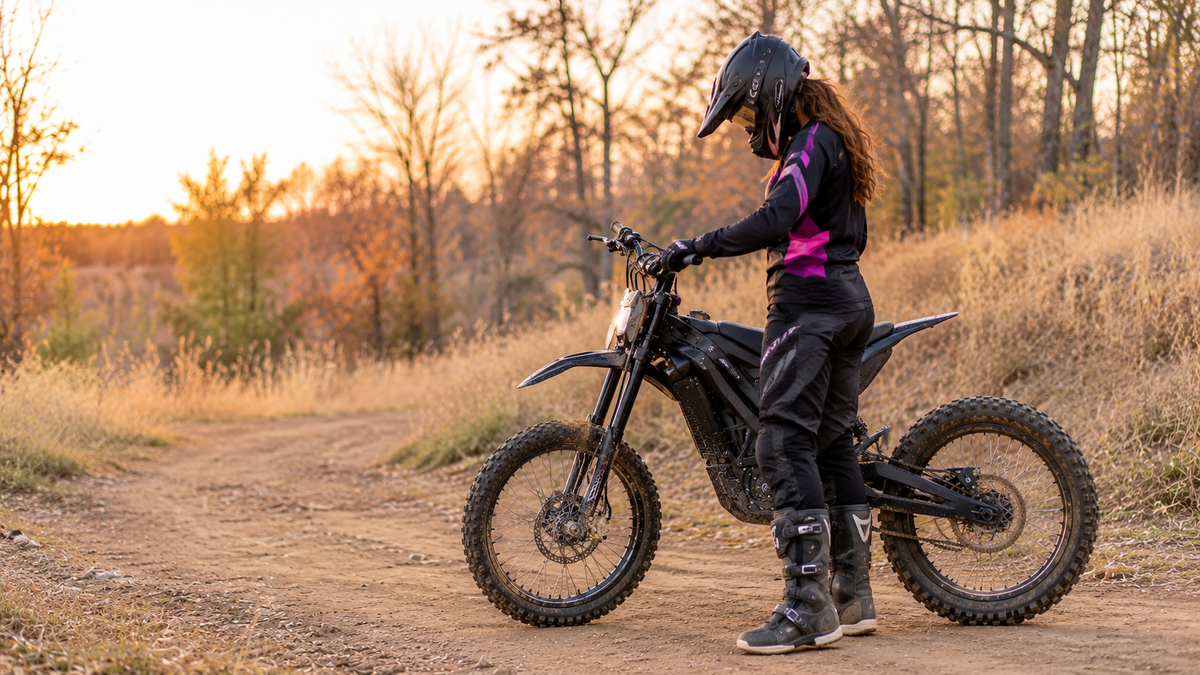
Best Electric Dirt Bike for Women: Fit, Weight and Handling Guide
Finding the best electric dirt bike for women starts with one simple idea.The right bike fits your body and skill level.It is not the bike with the biggest numbers on a spec sheet. This guide explains fit, weight, and handling in plain language. It shows how to measure yourself. It also walks through our bike lineup. You can choose with confidence.
Everything below applies to riders who are shorter, lighter, or new to off-road riding.You will find it useful if you are buying for yourself, a partner, or as a gift. Take your time, because a few minutes of measuring now can save you a lot of frustration later.
Quick Takeaways
- Electric dirt bikes are not built around gender. Seat height, weight, and power delivery decide how a bike feels.
- Measure your height, inseam, and weight before you compare models.
- Seat height is the number that affects confidence the most, especially for new riders.
- A lighter bike is easier to push, load, and pick up after a tip-over.
- Smooth, controllable power matters more than top speed when you are learning.
- Good protective gear that fits properly is part of the purchase, not an extra.
There Is No Such Thing as a “Women’s” E-Moto
Manufacturers do not design electric dirt bikes by gender. They design them around frame dimensions, seat height, weight, suspension travel, and power output. That means a rider’s body measurements and comfort level matter far more than anything else. Some women are tall and strong, others are petite, and the same is true of men.
So instead of searching for a bike made for women, search for a bike that fits you. That shift in thinking opens up more options and keeps you focused on what really counts.
That said, many women do notice two common challenges. Seat heights on popular models can feel tall, and a heavier bike can be harder to handle after a tip-over. Both problems are easy to avoid with smart shopping and a little technique, and we cover both below.
Step One: Take Your Measurements
Before you look at a single product page, grab a tape measure and write down these numbers.
- Height: Your overall height helps you judge reach to the handlebars and your riding posture.
- Inseam: Stand barefoot with your back against a wall. Place a hardcover book between your legs, pressed up snugly, and measure from the floor to the top of the book. This is the number to compare with seat height.
- Weight: Include the weight of your riding gear. It matters for the bike’s rider capacity and for suspension comfort.
- Reach and grip comfort: Hold a pair of bicycle handlebars or a similar bar. Notice how far your fingers reach to the brake lever.
- Lifting strength: Be honest about how comfortable you are lifting or pushing a heavy object.
Keep these numbers handy. They turn a confusing spec sheet into a simple checklist.
Seat Height: The Number That Decides Everything
If you only check one measurement, make it seat height. It tells you how far the seat sits from the ground, and it strongly affects how secure you feel when you stop, start, and turn at low speed.
Here is why it matters so much. When you are riding slowly on rough ground, you will often need to put a foot down. If you can only reach the ground with your toes, every stop feels risky. If you can plant the balls of both feet, or one foot flat, you will feel steady and calm, and that confidence helps you learn faster.
How to Read a Seat Height Spec
Seat height is usually measured with the bike unloaded. Once you sit on the bike, the suspension compresses slightly under your weight, which lowers the effective height. This compression is called sag, and it works in your favor.
As a rough guide, a seat several inches above your inseam will put you on your toes. A seat closer to your inseam lets you plant your feet more comfortably. Thick-soled riding boots add a little extra height too. Because every body and bike is different, treat this number as a starting point, not a final answer.
Test It Before You Order
If you cannot sit on the bike in person, create a quick stand-in at home. Measure the listed seat height up a wall, stack sturdy boxes or use a stool to match it, and sit on it with your boots on. Notice where your feet land. It is not perfect, but it gives you a realistic feel for what to expect.
The 2025 Sur-Ron Light Bee X, for example, lists a seat height of 32.6 inches. That is a useful reference point when you compare other bikes, and it shows why checking your inseam first is so important.
Weight: Dry, Curb, and Real-World
Bike weight affects far more than you might expect. It changes how easy it is to push the bike out of the garage. It also affects loading it into a truck. It changes how easy it is to balance at low speed. It also affects lifting it after a tip-over. Every new rider tips over at some point, so this is not a small detail.
Understand the Two Weight Numbers
- Dry weight: The weight of the bike without the battery or fluids.
- Curb weight: The weight of the ready-to-ride bike, including the battery.
Curb weight is the more honest number for real riding. For the 2025 Light Bee X, Sur-Ron lists a dry weight of 99.2 pounds and a curb weight of 125.6 pounds. Sur-Ron lists a carrying capacity of 220 pounds. Add your body weight and gear to stay within the limit.
The Simple Weight Test
When your bike arrives, try this in a safe, open space. Stand beside it, hold the handlebars, and walk it forward and backward. Then practice tilting it upright from the side stand. If the bike feels manageable, you are in good shape. If it feels like a struggle, ask yourself whether a lighter model would make riding more enjoyable.
How to Pick Up a Fallen Bike
Technique beats strength every time. Turn the bike off first. Then face the bike. Bend your knees. Keep your back straight. Hold the handlebar and a solid part of the frame. Lift with your legs. You can also use the rear grab area. Let your legs do the work, not your back. Practice this once on flat ground so you know what to do when it really happens.
Handling: What Makes a Bike Feel Easy to Ride
Handling is the way a bike responds to your inputs. A bike that handles well feels predictable, and predictable bikes build confidence quickly. Here are the main factors to consider.
Power Delivery and Ride Modes
Electric motors deliver torque the moment you twist the throttle. That instant response is exciting, but it can surprise new riders. Look for smooth throttle response and multiple ride modes, and check the product page to confirm which modes each bike offers. Start in the lowest power setting and move up only when you feel ready.
Brake Lever Reach
Smaller hands sometimes struggle to reach brake levers comfortably. Check if the levers are adjustable. Practice using one or two fingers on the lever. Keep your other fingers wrapped around the grip. Strong, easy braking is a major confidence builder.
Handlebar and Footpeg Position
The distance from the seat to the bars and pegs decides your riding posture. A bike that stretches you too far forward can feel awkward, while one that crowds you can limit your control. Sit on the bike, put your feet on the pegs, and check that your arms have a slight bend at the elbow.
Suspension Settings
Many bikes are set up for an average rider. If you are lighter than average, the stock suspension can feel firm and bouncy. When the suspension is adjustable, you can often soften it to better match your weight. Ask the seller what adjustments are possible before you buy.
Low-Speed Balance
Most beginner stumbles happen at walking pace, not high speed. Practice slow circles, figure eights, and gentle stops in an open area. These simple drills teach balance, throttle control, and braking all at once.
Power: Why Less Is More at First
It is tempting to chase the most powerful bike you can afford. But more power does not make you a better rider, and it can make learning harder. A beginner on a high-output bike can spend more time managing the throttle than building skills.
A smart approach is to choose a bike with controllable power and room to grow. Use low ride modes for your first few rides. Then move up slowly as your braking, turning, and body position improve. This keeps riding fun and helps you build good habits from the start.
Our Bikes Through a Fit Lens
Here is how the bikes in our lineup stack up when you think about fit, weight, and experience level. Prices reflect our store in November 2026 and can change, so always confirm them on the product page. Also read the rider size and weight guidance on each listing before you order.
Viper S: The Lowest-Priced Way In
The Viper S Electric Dirt Bike is priced at $698, making it the most affordable bike in this guide. If you are not sure how often you will ride, a lower-priced bike is a sensible way to find out. Check the product page for seat height, weight, and rider limits to make sure it suits your size.
Yozma IN-10 Pro: Listed for Teens and Adults
The Yozma IN-10 Pro starts at $1,799 and is listed for teens and adults. That makes it a worthwhile option for riders who want a step up from entry-level but are not ready to spend more. Compare its listed measurements with your inseam and weight before you decide.
79Bike Lynx and 79Bike Falcon GT: Mid-Range Performance
The 79Bike Lynx is priced at $3,998, and the 79Bike Falcon GT is priced at $4,798. Both sit in the mid-range, where performance climbs while pricing stays reasonable. As with every bike, compare seat height and weight against your measurements before you commit.
Sur-Ron Light Bee X: Popular and Well Known
The 2025 Sur-Ron Light Bee X starts at $4,499 and comes in five colors: Carbon Black, Phantom Purple, Lapis Blue, Sage Green, and Dark Knight. With a listed seat height of 32.6 inches and a curb weight of 125.6 pounds, it is a good example of why fit matters. Riders with a shorter inseam should sit on a stand-in at home first to see how comfortable that height feels.
Sur-Ron Ultra Bee: For Experienced Riders
The 2025 Sur-Ron Ultra Bee starts at $6,399 and sits at the performance end of our lineup. It is best suited to riders who already have solid skills and want more power. If you are a newer rider, build experience on a more approachable bike first.
Customize the Fit and Protect Your Bike
You do not have to accept every dimension exactly as it ships. Small changes can make a bike feel far more comfortable.
- Seat shape and padding: A different seat can change comfort and how you sit on the bike. Browse our seats and pegs and check each product’s dimensions before you buy.
- Footpeg choices: Pegs can affect grip and foot position, which changes control when you stand up.
- Lever position: Adjust levers so your fingers reach them without stretching.
- Protection: Every new rider drops a bike eventually. Parts from our protection and fenders collection can help guard your bike against scrapes and dirt.
Always check that any part you add fits your bike. Avoid changing safety-critical parts without expert guidance.
Protective Gear That Actually Fits
Good gear is the best safety investment you can make, and fit matters just as much as it does with the bike. Gear that is too loose can shift in a fall, and gear that is too tight can restrict movement.
- Helmet: It should feel snug without causing pressure points, and it should not move when you shake your head. If you have long hair, a low braid or low ponytail usually sits comfortably under a helmet.
- Goggles: Make sure they seal comfortably against your face and work with your helmet.
- Gloves: Choose a pair that lets you feel the throttle and levers while protecting your hands.
- Boots: Sturdy boots with ankle support protect your feet and add useful traction at stops.
- Knee and elbow guards and chest protection: These reduce the risk of injury during common beginner tumbles.
Many gear makers offer smaller sizes and women-specific fits. Try gear on before you commit when you can.
Your First Month: A Simple Practice Plan
A little structure helps you improve faster and stay safe. Here is an easy plan to follow.
Week One: Get Comfortable
Ride in an open, flat area in the lowest power mode. Practice starting, stopping, and walking the bike. Spend time simply sitting on it and getting used to the controls.
Week Two: Build Balance
Add slow circles, figure eights, and gentle turns. Work on standing on the pegs with your knees bent and your weight centered.
Week Three: Improve Braking
Practice braking smoothly from a moderate pace, using both brakes progressively. Aim for controlled stops without skidding.
Week Four: Try Easy Terrain
Head to a gentle, private trail or open dirt area. Keep the pace modest and focus on picking a clear line and looking ahead. Move up in power only when you feel truly comfortable.
Charging and Care Basics
A little routine care keeps your bike reliable. Use the charger that came with the bike.Charge in a dry, well-ventilated place.Follow the manufacturer’s instructions. Check tire pressure and brakes before each ride, and look over the bike for loose bolts. These quick checks take only a minute and make every ride safer.
Safety and Legal Basics
Most electric dirt bikes are built for off-road use, and rules vary by state and city. They are not treated the same way as pedal e-bikes, so check your local regulations and trail rules before you ride. Stick to private land or areas where riding is permitted, and always wear a helmet and protective gear. Ride with a friend when you can, especially while you are learning.
Common Mistakes to Avoid
- Ignoring seat height. A bike that makes you tiptoe will hold back your confidence.
- Choosing too much power. Start with controllable power and build up.
- Skipping the weight check. If you cannot comfortably handle the bike, riding becomes stressful.
- Buying gear that does not fit. Loose or tight gear is less protective.
- Riding alone in unfamiliar places. Learn in a safe, known area first.
- Skipping practice drills. Slow-speed skills are the foundation of everything else.
Frequently Asked Questions
What is the best electric dirt bike for women who are beginners?
The best choice is a bike that fits your inseam, feels manageable in weight, and offers controllable power. Compare each model’s seat height, weight, and ride modes with your measurements, and start in the lowest power setting.
What seat height should I look for?
Look for a seat height that lets you plant your feet confidently when stopped. A seat that is far above your inseam will put you on your toes, so compare the listed number with your measurement and use a stand-in at home to test it.
How heavy is too heavy?
It depends on your strength and comfort. A good test is whether you can walk the bike forward and backward and tilt it upright from its side stand. If that feels difficult, a lighter bike will probably be more enjoyable.
Can I make a bike feel lower?
Sometimes. A different seat shape, softer suspension for a lighter rider, and natural sag under your weight can change the ride feel. Check with the seller before making changes, and avoid altering safety-critical parts.
Are electric dirt bikes easier to ride than gas bikes?
Many riders find them simpler because there is no clutch or gear shifting. However, the instant torque still demands respect, so start in a low power mode and practice in an open area.
Do I need special gear?
Yes. A properly fitted helmet, goggles, gloves, sturdy boots, and protective pads are the minimum for off-road riding. Choose gear that fits well and allows free movement.
Final Thoughts: Choose the Bike That Fits You
The best electric dirt bike for women is simply the one that fits her best. Measure your inseam, check seat height and curb weight, start with controllable power, and invest in gear that fits properly. Do those things, and you will spend less time worrying and more time enjoying the ride.
Take your measurements, compare them with the listings, and ask questions if anything is unclear. The right bike is out there, and with the right fit, it will feel like it was made for you.