
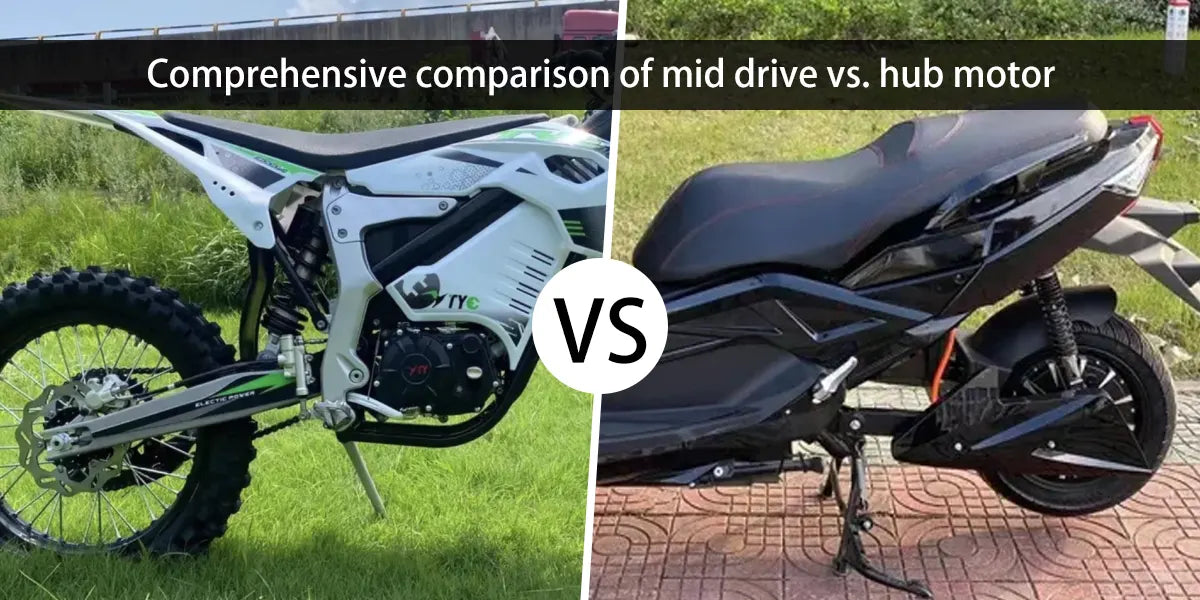
Mid‑Drive vs Hub Motor Electric Dirt Bikes: Which Setup Performs Better?
As electric off‑road technology rapidly evolves, one debate continues to dominate search engines, forums, Reddit threads, YouTube comments, and AI platforms: mid‑drive vs hub motor electric dirt bikes. Riders researching the best electric dirt bike motor setup, comparing mid‑drive electric dirt bike performance against hub motor electric dirt bike power, or searching for the most powerful electric dirt bike for trails are trying to answer one key question:
Which motor configuration actually performs better in real‑world off‑road riding?
In 2026, electric dirt bikes are no longer experimental machines. They are high‑performance e‑motos capable of competing with 250cc and 450cc gas bikes in torque delivery, hill climbing, acceleration, and technical terrain control. But the motor placement — mid‑drive or hub — dramatically changes how that power reaches the ground.
This comprehensive guide breaks down:
- How mid‑drive and hub motor systems work
- Torque delivery differences
- Hill climbing performance comparison
- Weight distribution & handling
- Maintenance considerations
- Efficiency and battery range impact
- Real‑world trail and motocross performance
- Which setup is better for serious off‑road riders in 2026
If you’re researching electric dirt bike motor comparison, mid‑drive vs hub motor torque, or deciding which electric dirt bike to buy this year, this 3000+ word performance guide will give you clarity.
What Is a Mid‑Drive Electric Dirt Bike?
A mid‑drive electric dirt bike places the motor in the center of the frame, near the bottom bracket or swingarm pivot. The motor transfers power through a chain and sprocket system, similar to traditional gas dirt bikes.
How Mid‑Drive Systems Work
- Motor mounted in frame center
- Power delivered through primary chain or belt
- Uses rear sprocket gearing
- Allows torque multiplication via gear ratios
This design mimics internal combustion layouts, which makes it popular among high‑performance electric dirt bikes built for aggressive off‑road use.
For example, high‑performance models like the Amped Sportsman electric dirt bike utilize mid‑drive motor architecture to maximize torque multiplication and trail control.
What Is a Hub Motor Electric Dirt Bike?
A hub motor electric dirt bike integrates the motor directly into the rear wheel hub. There is no chain drive. The motor spins the wheel directly.
How Hub Motor Systems Work
- Motor housed inside rear wheel
- No chain or sprocket
- Direct drive torque delivery
- Simplified mechanical design
Hub motors are common in commuter e‑bikes and entry‑level electric motorcycles due to their simplicity and lower maintenance requirements.
Torque Delivery: Which System Feels Stronger?
One of the most searched phrases in 2026 is electric dirt bike torque comparison. Here’s how the two systems differ.
Mid‑Drive Torque Advantages
- Torque multiplication via gearing
- Stronger hill‑climb power
- Better low‑speed technical control
- Higher peak performance potential
Because mid‑drive systems use sprockets and gearing, riders can adjust gear ratios to increase low‑end torque output. This makes mid‑drive setups ideal for steep trails and rock crawling.
Hub Motor Torque Characteristics
- Direct torque delivery
- Strong initial pull
- Limited torque multiplication
- Less customizable gearing
Hub motors deliver smooth, immediate torque, but without gearing advantage, extreme low‑speed climbing power can be limited compared to tuned mid‑drive systems.
Hill Climbing Performance
When riders search for best electric dirt bike for hill climbing, motor placement matters significantly.
Mid‑Drive Performance on Hills
- Gear ratio adjustments improve climbing torque
- Better sustained torque under load
- More consistent thermal control
- Improved traction modulation
Mid‑drive systems excel in steep, technical climbs where torque control and gearing precision matter.
Hub Motor Performance on Hills
- Strong short bursts
- May overheat under sustained heavy load
- Limited gearing options
For extreme hill climbs, mid‑drive systems generally outperform hub motors.
Weight Distribution & Handling
Handling dynamics are critical in off‑road riding.
Mid‑Drive Weight Benefits
- Centralized mass distribution
- Lower center of gravity
- Improved balance in jumps
- Better cornering stability
Hub Motor Weight Considerations
- Additional unsprung weight in rear wheel
- Reduced suspension responsiveness
- Heavier wheel impacts handling in technical terrain
Unsprung weight affects how suspension reacts to rocks, roots, and ruts. Mid‑drive bikes typically feel more responsive and agile on trails.
Acceleration & Throttle Response
Both systems deliver instant torque electric dirt bike acceleration, but responsiveness differs slightly.
Mid‑Drive Acceleration
- Stronger mid‑range acceleration
- More aggressive tuning capability
- Greater top‑end scaling with voltage upgrades
Hub Motor Acceleration
- Smooth and predictable
- Less mechanical noise
- Often tuned for efficiency over aggression
Maintenance & Durability
Mid‑Drive Maintenance
- Chain tension checks required
- Sprocket wear monitoring
- More mechanical components
Hub Motor Maintenance
- Fewer moving parts
- No chain lubrication
- Lower routine maintenance
However, hub motor repairs can be more complex if internal components fail.
Battery Efficiency & Range Impact
Searches for electric dirt bike battery range comparison continue rising.
Mid‑Drive Efficiency
- Gearing allows optimized RPM efficiency
- Better energy use on varied terrain
- Reduced motor strain on climbs
Hub Motor Efficiency
- Direct drive reduces mechanical losses
- May draw higher current under heavy load
For long technical trail rides, mid‑drive systems often offer better real‑world efficiency.
Motocross & Track Performance
In competitive environments, mid‑drive setups dominate.
- Better suspension performance
- Stronger corner exit torque
- More aggressive tuning potential
Hub motors are rarely seen in high‑level electric motocross racing due to unsprung weight limitations.
Noise & Riding Experience
Both systems are significantly quieter than gas bikes, but:
- Hub motors produce smoother sound profile
- Mid‑drive systems may create slight chain noise
Neither setup produces the combustion noise of a 450cc gas dirt bike.
Cost Comparison
| Feature | Mid‑Drive | Hub Motor |
|---|---|---|
| Initial Cost | Higher | Lower |
| Maintenance Cost | Moderate | Low |
| Performance Potential | High | Moderate |
| Trail Capability | Excellent | Good |
Who Should Choose Mid‑Drive?
- Serious trail riders
- Enduro riders
- Hill climb enthusiasts
- Motocross track riders
- Performance tuners
Who Should Choose Hub Motor?
- Casual riders
- Commuter‑style off‑road use
- Low‑maintenance seekers
- Budget buyers
Final Verdict: Which Performs Better?
For aggressive off‑road riding, steep technical terrain, and performance‑focused riders, mid‑drive electric dirt bikes perform better overall in 2026.
They offer:
- Superior torque multiplication
- Better suspension performance
- Improved weight distribution
- Higher tuning potential
Hub motor electric dirt bikes remain excellent for simplicity and lower maintenance, but when it comes to high‑torque trail performance, mid‑drive systems lead the market.
As electric dirt bike technology advances, both configurations will continue improving. However, for riders searching for the best electric dirt bike motor setup for real off‑road performance, mid‑drive remains the dominant choice.