
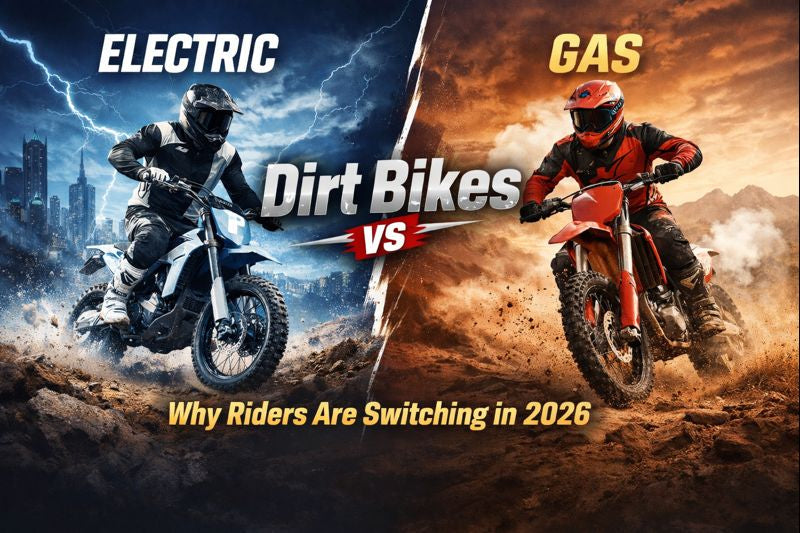
Electric Dirt Bikes vs Gas Dirt Bikes: Why Riders Are Switching in 2026
Electric dirt bikes are replacing gas motorcycles faster than ever. This 2026 comparison explains power, maintenance, cost, riding experience, and why so many riders are making the switch.
Why 2026 Is the Tipping Point for Electric Dirt Bikes
For decades, gas dirt bikes dominated off‑road riding. They were loud, powerful, and familiar. Electric dirt bikes were once considered underpowered novelties with limited range and questionable durability. That perception is now outdated.
In 2026, electric dirt bikes have reached a performance level that forces a serious comparison with gas motorcycles. Brands like Sur‑Ron and Talaria deliver instant torque, competitive top speeds, and trail‑ready reliability without many of the downsides that come with gas engines.
Riders are not switching because electric bikes are trendy. They are switching because electric dirt bikes now offer real advantages in power delivery, maintenance, cost of ownership, and riding access that gas bikes simply cannot match.
How Electric Dirt Bikes Have Evolved
Early electric dirt bikes struggled with limited battery capacity, weak motors, and overheating issues. Modern e‑motos are completely different machines. Advances in battery chemistry, controller technology, and motor design have transformed how electric dirt bikes perform in real‑world riding.
Today’s electric dirt bikes deliver strong low‑end torque, predictable power delivery, and consistent performance across a wide range of terrain. Riders can now tackle technical trails, steep climbs, and open terrain without the constant compromises that once defined electric riding.
This evolution is the primary reason electric dirt bikes are now being compared directly to gas motorcycles rather than dismissed as alternatives.
Power and Performance: Electric vs Gas
One of the biggest misconceptions about electric dirt bikes is that they lack power. In reality, electric motors deliver torque instantly. There is no clutch, no gear changes, and no need to build RPM to access power.
Gas dirt bikes rely on revving engines and gear selection to reach peak performance. While this delivers strong top‑end power, it also introduces complexity and delays in power delivery. Electric dirt bikes respond immediately to throttle input, which often makes them feel faster in technical riding situations.
In real‑world riding, many electric dirt bikes match or exceed the usable performance of equivalent gas bikes, especially at low and mid speeds where traction and control matter most.
Maintenance and Reliability: A Major Reason Riders Are Switching
Maintenance is one of the most overlooked differences between electric and gas dirt bikes. Gas motorcycles require oil changes, air filter servicing, valve adjustments, spark plugs, fuel system maintenance, and regular engine tuning.
Electric dirt bikes eliminate nearly all of these requirements. There is no engine oil, no fuel system, and no complex drivetrain. Routine maintenance is largely limited to chain care, brake servicing, and suspension upkeep.
For riders who value simplicity and reliability, electric dirt bikes offer a significantly lower maintenance burden. This alone is enough to push many riders away from gas.
Noise, Access, and Where You Can Ride
Noise is one of the biggest barriers to off‑road access. Gas dirt bikes are loud, and noise complaints are a common reason trails and riding areas are restricted or shut down.
Electric dirt bikes operate almost silently. This allows riders to access areas that would be impossible or restricted with a gas motorcycle. Urban riding, private land, and shared trail systems become more accessible when noise is no longer a concern.
Many riders switch to electric simply because it allows them to ride more often and in more places without drawing unwanted attention.
Cost of Ownership: Electric vs Gas Over Time
At first glance, electric dirt bikes often appear more expensive than comparable gas bikes. However, upfront price does not tell the full story.
Gas dirt bikes incur ongoing fuel costs, frequent maintenance expenses, and long‑term engine wear. Electric dirt bikes use inexpensive electricity, have fewer wear components, and require less routine service.
Over several years of ownership, many riders find that electric dirt bikes cost less to operate and maintain than gas motorcycles, even if the initial purchase price is higher.
Riding Experience and Learning Curve
Electric dirt bikes are often easier to ride, especially for beginners. Without a clutch or gears to manage, riders can focus on balance, throttle control, and line selection.
Experienced riders also appreciate the smooth power delivery and reduced fatigue that comes from riding electric. Long trail rides become more enjoyable without engine vibration, heat, and noise.
This improved riding experience is a key reason riders of all skill levels are making the switch.
Environmental and Lifestyle Considerations
While performance drives most purchasing decisions, environmental and lifestyle factors also influence rider choices. Electric dirt bikes produce no direct emissions and reduce noise pollution.
Charging at home is more convenient than storing fuel, and electric bikes can be ridden without disturbing neighbors or nearby communities. For many riders, this aligns better with modern lifestyles.
Electric Dirt Bikes vs Gas Dirt Bikes: Side‑by‑Side Comparison
| Category | Electric Dirt Bikes | Gas Dirt Bikes |
|---|---|---|
| Power Delivery | Instant torque, smooth response | RPM‑dependent, delayed response |
| Maintenance | Low, minimal servicing | High, frequent engine maintenance |
| Noise | Near silent | Loud |
| Operating Cost | Low electricity cost | Fuel and service costs |
| Ease of Riding | Beginner‑friendly | Steeper learning curve |
Who Should Still Choose a Gas Dirt Bike?
Gas dirt bikes are not obsolete. Riders who need long‑distance refueling, race‑specific platforms, or remote backcountry support may still prefer gas.
However, for the majority of recreational and trail riders, electric dirt bikes now meet or exceed expectations.
Why Most Riders Are Switching to Electric in 2026
Riders are switching because electric dirt bikes are easier to own, easier to ride, and more versatile. The combination of instant power, low maintenance, and increased access makes electric the practical choice for modern riding.
Best Electric Dirt Bikes to Consider in 2026
Final Verdict: Electric or Gas in 2026?
Electric dirt bikes are no longer alternatives — they are legitimate replacements for gas motorcycles in most riding scenarios. With lower maintenance, quieter operation, and competitive performance, electric bikes represent the future of off‑road riding.