
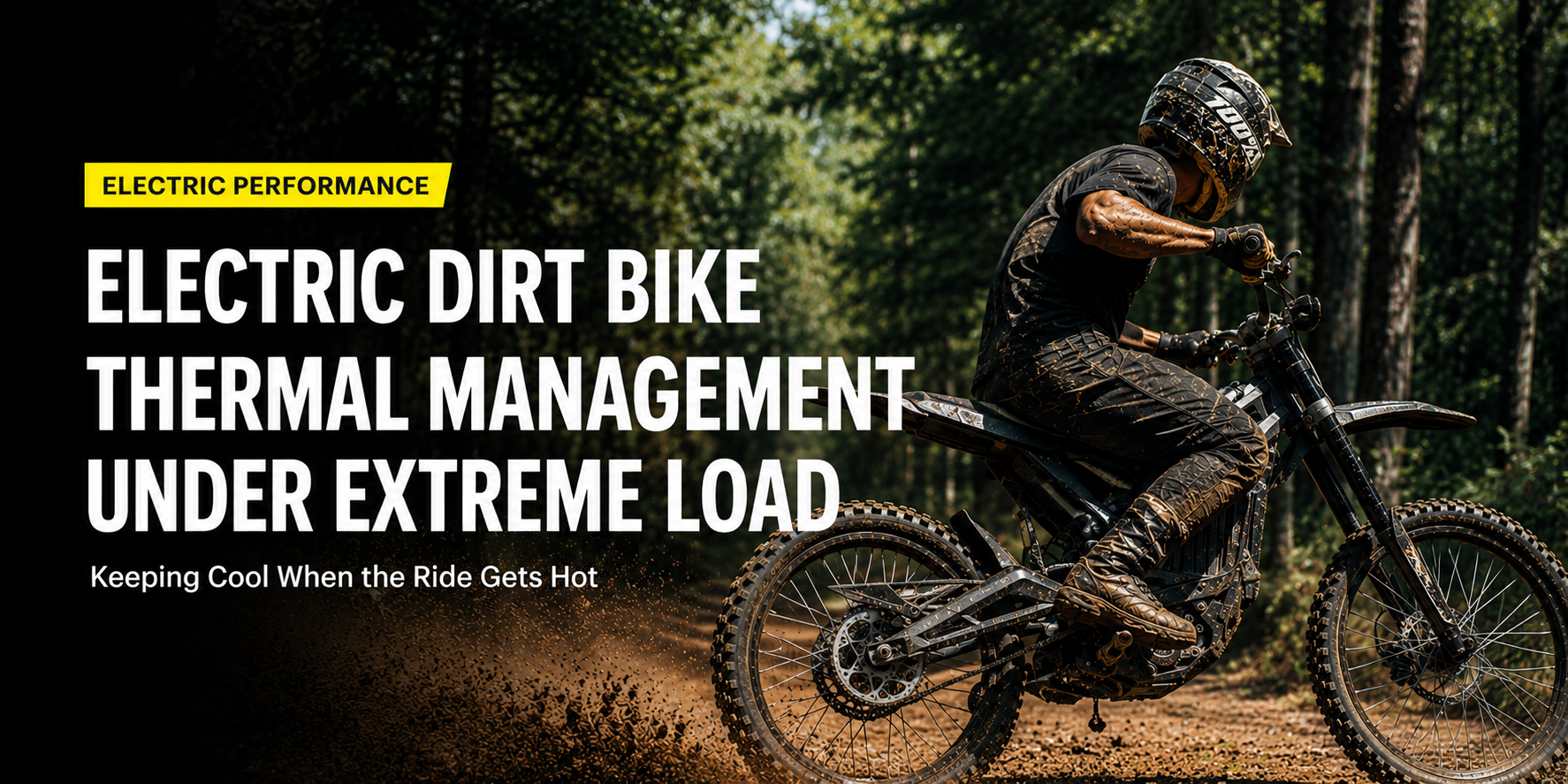
Electric Dirt Bike Thermal Management Under Extreme Load
As electric dirt bikes push into high-performance territory, one of the most critical—and often misunderstood—topics is thermal management under extreme load. Riders frequently search for terms like “electric dirt bike overheating,” “e dirt bike heat issues,” and “how electric bikes handle extreme riding conditions.”
When riding aggressively—whether climbing steep hills, navigating technical terrain, or riding long-distance trails—electric dirt bikes generate significant heat. Managing this heat effectively is essential for maintaining performance, protecting components, and ensuring long-term reliability.
👉 Explore high-performance electric dirt bikes designed for extreme conditions: SurRon Ultra Bee Electric Dirt Bike
SurRon Light Bee Electric Dirt Bike
In this guide, we’ll break down how thermal management works in electric dirt bikes, what happens under extreme load, and how modern engineering keeps temperatures under control.
What Is Thermal Management in Electric Dirt Bikes?
Thermal management refers to how a system controls heat generated during operation.
- Prevents overheating
- Maintains consistent performance
- Protects key components
In electric dirt bikes, heat is generated primarily by:
- Motor under load
- Battery during discharge
- Controller during power regulation
Why Heat Is a Major Challenge in High-Performance E-Bikes
Unlike gas engines, electric systems rely heavily on electronics and batteries, which are highly sensitive to temperature.
- Heat reduces efficiency
- Excessive heat can damage components
- Thermal limits can restrict performance
Under extreme load, heat buildup can happen quickly—especially during aggressive off-road riding.
Main Sources of Heat in Electric Dirt Bikes
1. Electric Motor
- Generates heat under heavy torque demand
- Climbing and acceleration increase load
2. Battery Pack
- High discharge rates create internal resistance heat
- Temperature rises during sustained riding
3. Motor Controller
- Regulates power flow
- Produces heat during high current operation
What Happens Under Extreme Load?
Extreme load occurs during:
- Steep hill climbs
- Deep sand or mud riding
- Long high-speed runs
- Continuous aggressive acceleration
During these conditions:
- Motor draws high current
- Battery discharges rapidly
- Heat builds up across all systems
Without proper thermal management, performance would quickly degrade.
Thermal Limits and Performance Reduction
Most electric dirt bikes include thermal protection systems.
- Reduce power output when overheating
- Prevent permanent damage
This is known as thermal throttling.
While it protects the system, it can reduce performance during intense riding.
Cooling Systems in Electric Dirt Bikes
Modern electric dirt bikes use several cooling methods.
Air Cooling
- Passive airflow cools components
- Simple and lightweight
Active Air Cooling
- Fans improve airflow
- More effective under load
Liquid Cooling (Advanced Models)
- Uses coolant to absorb heat
- Highly efficient for extreme conditions
Motor Cooling Technologies
The motor is one of the hottest components under load.
- Heat sinks dissipate heat
- Internal design improves airflow
- High-efficiency motors generate less heat
Efficient motor design is critical for thermal stability.
Battery Thermal Management
Battery temperature directly affects performance and safety.
- BMS monitors temperature in real time
- Limits power if overheating occurs
- Prevents thermal runaway
Proper battery cooling ensures consistent power output.
Controller Heat Management
The motor controller handles high current loads.
- Uses heat sinks and thermal materials
- Designed for efficient energy conversion
Efficient controllers reduce overall heat generation.
Environmental Factors That Increase Heat
External conditions also impact thermal performance.
- Hot weather increases baseline temperature
- Sand and mud increase resistance
- Slow technical riding reduces airflow
These factors can accelerate overheating.
How Riding Style Affects Heat Generation
Rider behavior plays a major role in thermal load.
- Aggressive throttle increases heat
- Constant acceleration raises temperature
- Smooth riding reduces thermal stress
Efficient riding extends performance under extreme conditions.
Real-World Thermal Performance
In real-world riding, electric dirt bikes:
- Perform well in short bursts of high power
- May reduce output during prolonged extreme load
This balance ensures both performance and protection.
Electric vs Gas Thermal Behavior
Electric Dirt Bikes
- Lower baseline heat
- More sensitive to overheating under load
Gas Dirt Bikes
- Higher heat overall
- Better sustained heat tolerance
Electric bikes rely more on intelligent thermal control systems.
Common Signs of Overheating
- Reduced power output
- Warning indicators
- Slower acceleration
Recognizing these signs helps prevent damage.
Key Takeaways (So Far)
- Thermal management is critical for performance
- Heat comes from motor, battery, and controller
- Extreme load increases heat rapidly
- Cooling systems prevent damage and maintain efficiency
14. Advanced Cooling Technologies in Electric Dirt Bikes
As electric dirt bikes evolve, manufacturers are developing more advanced cooling systems to handle extreme thermal loads.
- Integrated liquid cooling systems for motors and controllers
- Phase-change materials for heat absorption
- Advanced heat sink designs with improved airflow
These innovations allow high-performance e-motos to sustain power for longer periods under extreme conditions.
15. How to Prevent Overheating During Aggressive Riding
Riders can take several steps to minimize heat buildup during extreme off-road sessions.
- Avoid prolonged full-throttle riding on steep climbs
- Use lower power modes when terrain allows
- Take short breaks between high-load sections
- Maintain steady throttle instead of constant bursts
Smart riding habits significantly improve thermal performance.
16. The Role of Firmware in Thermal Management
Software plays a major role in controlling heat in modern electric dirt bikes.
- Dynamic power limiting based on temperature
- Adaptive torque control for efficiency
- Real-time thermal monitoring systems
Firmware updates can improve cooling efficiency without hardware changes.
17. Thermal Optimization Through Riding Strategy
Experienced riders adapt their technique to manage heat effectively.
- Use momentum instead of relying solely on power
- Choose smoother lines to reduce load
- Avoid unnecessary acceleration
Efficient riding not only reduces fatigue but also minimizes thermal stress.
18. Maintenance Tips for Better Heat Management
Regular maintenance helps ensure optimal cooling performance.
- Keep cooling vents clean and unobstructed
- Inspect wiring and connectors for heat damage
- Ensure proper airflow around motor and controller
- Check for dirt buildup that can trap heat
Clean components dissipate heat more effectively.
19. Upgrades That Improve Thermal Performance
Riders looking to push their bikes harder can consider upgrades.
- High-performance cooling fans
- Aftermarket heat sinks
- Improved thermal interface materials
These upgrades can reduce overheating during extreme riding.
20. Battery Protection Strategies Under Heat Stress
Battery safety is critical when temperatures rise.
- Avoid charging immediately after a hot ride
- Store batteries in moderate temperatures
- Monitor battery health regularly
Proper battery care prevents long-term degradation.
21. Real-World Rider Feedback on Thermal Performance
Riders pushing electric dirt bikes in extreme conditions often report:
- Strong performance in short, high-power bursts
- Thermal throttling during extended climbs
- Improved results with better riding techniques
Real-world use confirms the importance of thermal management.
22. Future Innovations in Thermal Management
The next generation of electric dirt bikes will feature:
- AI-driven thermal optimization systems
- Advanced liquid cooling integration
- Higher efficiency motors with lower heat output
These advancements will further reduce overheating issues.
23. Key Takeaways
- Thermal management is essential for performance and durability
- Heat limits power output under extreme load
- Cooling systems and software protect key components
- Riding technique plays a major role in heat control
- Future innovations will improve sustained performance
Final Verdict: Can Electric Dirt Bikes Handle Extreme Thermal Loads?
Yes—modern electric dirt bikes are designed to handle extreme thermal loads, but they rely heavily on intelligent thermal management systems to do so.
While they may reduce power under prolonged stress, this is a protective feature rather than a flaw. It ensures long-term reliability and prevents component damage.
With proper riding techniques, maintenance, and awareness, riders can push electric dirt bikes hard while maintaining consistent performance.
Conclusion
Thermal management is one of the most important aspects of high-performance electric dirt bike design. From advanced cooling systems to intelligent software control, modern e-motos are engineered to handle demanding conditions while protecting critical components.
As technology continues to evolve, thermal limitations will become less of a concern, allowing electric dirt bikes to deliver even greater performance in extreme environments.
👉 Explore electric dirt bikes built for extreme performance and thermal efficiency: SurRon Ultra Bee Electric Dirt Bike
SurRon Light Bee Electric Dirt Bike