
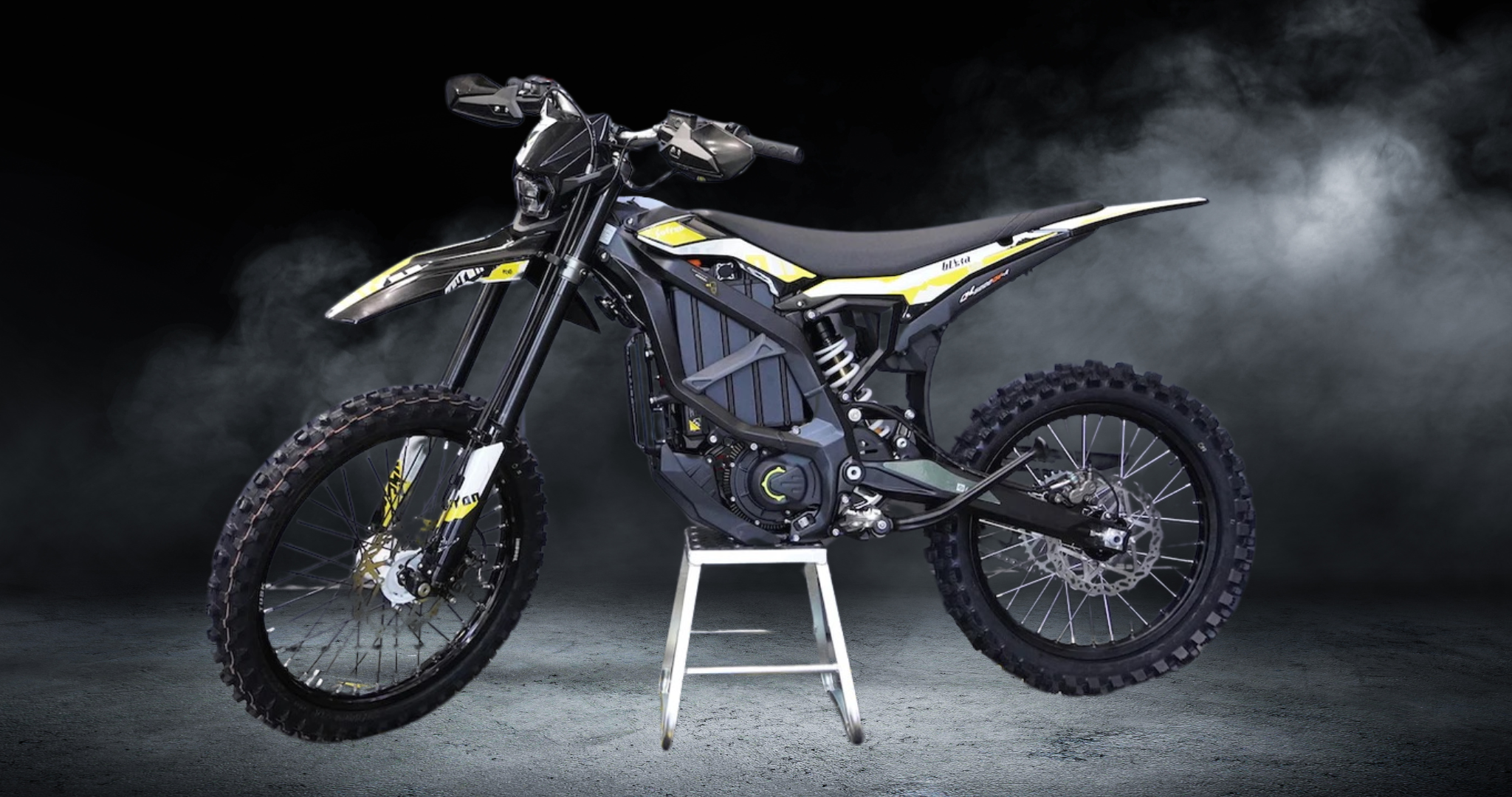
Electric Dirt Bike Gear Ratios: Why Sprocket Size Still Matters in 2026
Electric dirt bikes may not have traditional gears like gas-powered motorcycles, but that doesn’t mean gearing is irrelevant. In fact, gear ratio—controlled by sprocket size—is one of the most important factors affecting performance.
👉 Explore upgrade-friendly bikes: SurRon Light Bee Electric Dirt Bike
Talaria Sting Electric Dirt Bike
In this guide, we’ll break down how gear ratios work, why sprocket size matters, and how you can tune your electric dirt bike for maximum performance.
What Is a Gear Ratio in an Electric Dirt Bike?
A gear ratio is the relationship between the front sprocket (attached to the motor) and the rear sprocket (attached to the wheel).
Even though electric dirt bikes don’t use multi-gear transmissions, they still rely on a single fixed gear ratio to transfer power.
This ratio determines:
- Acceleration
- Top speed
- Torque delivery
- Overall riding feel
Changing sprocket size directly changes this ratio.
How Sprocket Size Affects Performance
Sprocket size is the easiest way to modify your gear ratio.
Larger Rear Sprocket:
- More torque
- Faster acceleration
- Lower top speed
Smaller Rear Sprocket:
- Higher top speed
- Less torque
- Slower acceleration
This simple adjustment can completely change how your bike feels.
Why Gear Ratios Still Matter in Electric Bikes
Many riders assume electric bikes don’t need gearing because they deliver instant torque. While that’s partially true, gear ratio still plays a critical role in:
- Maximizing efficiency
- Controlling power delivery
- Optimizing performance for terrain
Without proper gearing, even the most powerful electric dirt bike can feel underwhelming or inefficient.
1. Torque vs Speed Trade-Off
The most important concept in gear ratios is the balance between torque and speed.
- Higher gear ratio (bigger rear sprocket) = more torque
- Lower gear ratio (smaller rear sprocket) = more speed
You cannot maximize both at the same time—every setup is a compromise.
2. Acceleration Differences
Acceleration is heavily influenced by sprocket size.
Torque-Focused Setup:
- Faster takeoff
- Better for trails
- Improved control
Speed-Focused Setup:
- Slower initial acceleration
- Better for open terrain
- Higher top-end performance
3. Top Speed Optimization
If your goal is higher top speed, reducing the rear sprocket size is the most common upgrade.
However:
- You may lose climbing power
- Acceleration becomes less aggressive
👉 High-speed capable platform: Talaria Sting Electric Dirt Bike
4. Hill Climbing Performance
Hill climbing requires torque, not speed.
A larger rear sprocket:
- Improves climbing ability
- Reduces motor strain
- Provides better traction
This is why off-road riders often prefer torque-heavy gearing.
5. Chain and Drivetrain Efficiency
Changing sprocket size also affects drivetrain efficiency.
- Proper alignment improves performance
- Incorrect sizing increases wear
- Balanced setup ensures longevity
Efficiency isn’t just about power—it’s also about durability.
6. Battery Efficiency and Range
Gear ratio directly impacts energy consumption.
Torque Setup:
- More efficient at low speeds
- Better for technical terrain
Speed Setup:
- Higher energy consumption at acceleration
- Better efficiency at steady high speeds
Choosing the right ratio can extend your riding range.
7. Riding Style Compatibility
Different riders need different setups.
Trail Riders:
- Prefer larger sprockets
- Need torque and control
Urban Riders:
- Prefer balanced ratios
- Need versatility
Speed Riders:
- Prefer smaller sprockets
- Focus on top speed
8. Real-World Performance Impact
Changing your sprocket can feel like upgrading your entire bike.
Riders often notice:
- Better acceleration
- Improved handling
- More responsive power delivery
It’s one of the most cost-effective upgrades available.
9. Stock vs Upgraded Sprocket
Stock Setup:
- Balanced performance
- Safe for general use
- Limited customization
Upgraded Setup:
- Performance-focused
- Customizable for terrain
- More specialized riding experience
10. Common Sprocket Sizes in 2026
Most electric dirt bikes use:
- 48T–54T for balanced riding
- 54T–60T for torque setups
- Under 48T for speed setups
Choosing the right size depends on your goals.
11. Front vs Rear Sprocket Changes
Most riders change the rear sprocket because:
- Easier to replace
- More noticeable impact
- Safer adjustment range
Front sprocket changes are less common but still effective.
12. Installation and Compatibility
Before upgrading, consider:
- Chain length compatibility
- Motor power limits
- Frame clearance
Improper installation can cause serious issues.
13. Risks of Incorrect Gear Ratio
Wrong gearing can negatively affect performance:
- Overheating
- Poor acceleration
- Reduced battery efficiency
- Increased wear and tear
Always choose a ratio that matches your riding style.
14. Advanced Sprocket Tuning Strategies
Once you understand the basics of gear ratios, the next step is fine-tuning your sprocket setup for maximum performance. In 2026, riders are no longer just swapping sprockets—they are optimizing gearing based on terrain, riding style, and performance goals.
Advanced sprocket tuning focuses on:
- Maximizing efficiency
- Balancing torque and speed
- Reducing motor strain
The goal is to create a setup that feels perfectly matched to your riding conditions.
15. Fine-Tuning for Acceleration
If your goal is quicker acceleration, increasing the rear sprocket size is the most effective adjustment.
Benefits:
- Faster takeoff
- Stronger low-end power
- Better control in tight trails
This setup is ideal for technical riding and off-road environments.
16. Fine-Tuning for Top Speed
For riders focused on speed, reducing the rear sprocket size allows the bike to reach higher top-end performance.
Benefits:
- Higher maximum speed
- Lower RPM at cruising speeds
- Better performance on open terrain
However, this comes at the cost of acceleration and torque.
17. Terrain-Based Gear Ratio Optimization
Different terrains require different gearing setups.
Rocky / Technical Trails:
- Larger sprocket (high torque)
- Better control
- Reduced wheel spin
Sand / Loose Terrain:
- Torque-focused setup
- Improved traction
- Smoother power delivery
Open Tracks / Roads:
- Smaller sprocket (high speed)
- Better top-end performance
- Efficient cruising
18. Chain Length and Tension Adjustments
Changing sprocket size often requires adjusting the chain length and tension.
- Larger sprocket = longer chain needed
- Proper tension prevents wear
- Incorrect setup reduces efficiency
Always ensure your drivetrain is properly aligned after any change.
19. Matching Gear Ratio with Motor Power
Your motor’s power output plays a huge role in choosing the right gear ratio.
- High-power motors can handle speed-focused setups
- Lower-power motors benefit from torque-focused gearing
A mismatch can result in poor performance and inefficiency.
20. Real-World Example Setups
Here are some common setups riders use:
Balanced Setup:
- 52T rear sprocket
- Good mix of speed and torque
Torque Setup:
- 56T–60T rear sprocket
- Best for trails and climbing
Speed Setup:
- 44T–48T rear sprocket
- Best for open riding
21. Impact on Riding Feel
Sprocket changes don’t just affect numbers—they completely change how the bike feels.
- Torque setup feels aggressive and responsive
- Speed setup feels smooth and stretched out
- Balanced setup feels versatile
This is why many riders experiment until they find the perfect setup.
22. Efficiency vs Performance Trade-Off
Just like controller tuning, gearing involves trade-offs.
- More torque = higher energy use at speed
- More speed = weaker acceleration
The best setup depends on your priorities.
23. Beginner vs Advanced Setup Strategy
Beginners:
- Stick to near-stock ratios
- Focus on control and safety
- Make small adjustments
Advanced Riders:
- Experiment with extreme ratios
- Optimize for specific terrain
- Combine with controller tuning
24. Combining Gear Ratio with Controller Tuning
The best performance comes from combining mechanical and electronic tuning.
- Sprocket controls mechanical power delivery
- Controller controls electronic power delivery
Together, they create a fully optimized riding experience.
👉 Explore customizable platform: SurRon Light Bee Electric Dirt Bike
25. Is a Sprocket Upgrade Worth It?
Sprocket upgrades are one of the most cost-effective performance improvements you can make.
- Affordable upgrade
- Immediate performance change
- Fully customizable
For most riders, it’s one of the first modifications worth considering.
Key Takeaways
- Gear ratio still plays a critical role in electric dirt bikes
- Sprocket size directly affects torque and speed
- Larger sprockets improve acceleration and climbing
- Smaller sprockets increase top speed
- Proper setup depends on terrain and riding style
Conclusion
Even in 2026, when electric dirt bikes dominate with advanced motors and controllers, gear ratios remain a fundamental part of performance tuning. Sprocket size may seem like a small detail, but it has a massive impact on how your bike accelerates, climbs, and reaches top speed.
By understanding and optimizing your gear ratio, you can transform your riding experience without expensive upgrades. Whether you want more torque for trails or higher speed for open terrain, adjusting your sprocket is one of the simplest and most effective ways to achieve your goals.
The key is balance. The perfect setup depends on your riding style, terrain, and performance priorities. As electric dirt bike technology continues to evolve, combining sprocket tuning with controller optimization will become the ultimate way to unlock maximum performance.